


Contributed by: Lois Herr — First Church of Christ, Scientist, McLean
Many people set aside time in their day for prayer, reflection, or meditation. As a Christian Science practitioner, I often find inspiration in daily audio reflections, called the Daily Lift, and presented by members of our church.
A recent Daily Lift by Cher Cofrin, a Christian Science Practitioner from Port St. Lucie, Florida, caught my attention. It is entitled Glorify God every step of the way. In this segment, Cher shares how the challenges of a year’s-long real estate transaction helped her to experience a peace that replaced fear. She discusses how, as she trusted in God’s provision, needed pieces fell into place. This experience also reinforced for her that every moment of the day can bring an opportunity to glorify God.
The Daily Lift is comprised of audio presentations contributed by Christian Science church members worldwide – with the majority coming from the U.S. This particular Lift will remain on the website for thirty days before being retired.
May this segment bring you peace and encouragement.
This blog post is the expressed opinion of its writer and does not necessarily reflect the views of Tysons Interfaith or its members.
In a world where troubling news abounds, Tysons Interfaith is dedicating 2026 to highlighting “What’s Going Right.” Whether it is individuals, organizations or nations working to improve the lives of others and to build a just and peaceful future for all of us, there is always good news to be found.
The following blog post illustrates how people of differing faiths and backgrounds are gathering in community to have meaningful conversations. Please join us! We hope this post will encourage and inspire you to make a positive difference in your own corner of the world.
————————————————————————————————-
Contributed by Stephen Wickman, St. Thomas Episcopal
The theme of this month’s Tysons Interfaith Coffee House was polarization, a major concern that came up in prior months. (Please drop by anytime 11:00-12:30 on the second Wednesday each month; programs start about 11:30, but all are welcome at any time.)
Facilitated by the Rev. Dr. Trish Hall, we talked about how our personal blinders go up when we discuss sensitive subjects and how we interrupt and focus on ourselves. To avoid this, it was important to listen respectfully, even to those who cannot seem to articulate the foundation for their beliefs or who lack critical reasoning skills.
I was put on the spot at one point to explain why I am a Christian, and my response was all over the map. I noted that my faith journey began in the fundamentalism of my family, moved through the Methodist church, and then found a home in the broad tent of the American Episcopal church. In retrospect, I was trying to explain what some call the Wesleyan Quadrilateral, after John Wesley, the Anglican priest who founded Methodism and who based his teaching on scripture, tradition, reason, and experience. The Episcopal Church accepts his approach, among many others.
I was also asked why, as a Christian, I am moved to participate in interfaith work. Well, Jesus of Nazareth expressed his love for all people, particularly those on the margins of society, regardless of their background. Shortly after his death, Paul the Evangelist successfully promoted his teaching, linking it to Judaism and Greek traditions and philosophy. These had broad appeal that ultimately enlightened Europe and America.
Foreign observers have long noted that, more so than in Europe, religion is a powerful force in American society. This fact puzzled Alexis de Tocqueville, who esteemed the United States for keeping religion out of politics and relegating it to the personal sphere. Perhaps that has changed, particularly with the rise of social media, where personal opinions are blared far and wide in the form of memes or short posts that often lack civility, let alone critical thinking.
I will leave you with something I came across recently on a Jesuit website. I hope it will spark your interest to join our discussions.
A Prayer for Unity
In this century and in any century,
Our deepest hope, our most tender prayer,
Is that we learn to listen.
May we listen to one another in openness and mercy
May we listen to plants and animals in wonder and respect
May we listen to our own hearts in love and forgiveness
May we listen to God in quietness and awe.
And in this listening,
Which is boundless in its beauty,
May we find the wisdom to cooperate
With a healing spirit, a divine spirit
Who beckons us into peace and community and creativity.
We do not ask for a perfect world.
But we do ask for a better world.
We ask for deep listening.
– Jay McDaniel, Professor of Religion, Hendrix College, Arkansas
This blog post is the expressed opinion of its writer and does not necessarily reflect the views of Tysons Interfaith or its members.
To learn more about Tysons Interfaith, please visit: https://tysonsinterfaith.org/.
Contributed by Stephen Wickman, St. Thomas Episcopal
In this 250th year of American independence, this Juneteenth prayer from the Roman Catholic Sisters of Mercy (www.sistersofmercy.org) reminds us of our commitment to the equality of all people and our aspiration to form “a more perfect union.”
“Good and gracious God,
Who loves and delights in all people,
we stand in awe before You,
knowing that the spark of life within each person on earth is the spark of your divine life.
Differences among cultures and races are multicolored manifestations of Your Light.
May our hearts and minds be open to celebrate similarities and differences among our sisters and brothers.
We place our hopes for racial harmony in our committed action and in Your Presence in our Neighbor.
May all peoples live in Peace.
AMEN.”
This blog post is the expressed opinion of its writer and does not necessarily reflect the views of Tysons Interfaith or its members.
In a world where troubling news abounds, Tysons Interfaith is dedicating 2026 to highlighting “What’s Going Right.” Whether it is individuals, organizations or nations working to improve the lives of others and to build a just and peaceful future for all of us, there is always good news to be found.
We hope the following blog post will bring you encouragement and inspiration to make a positive difference in your own corner of the world.
———————————————————————————-
Contributed by Michael Goldberg, the Baha’i Community
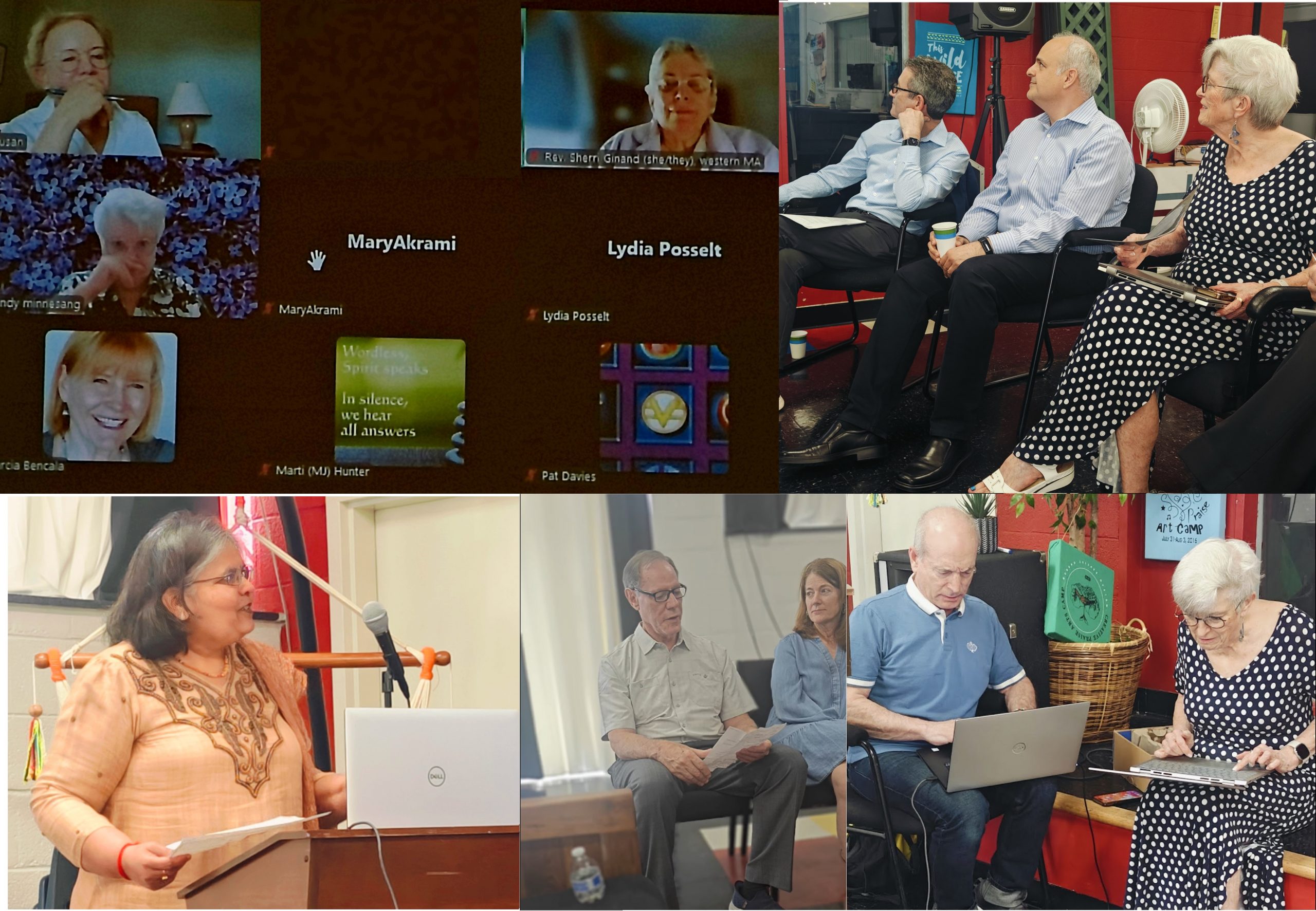
On May 17, 2026, Tysons Interfaith sponsored an educational event that explored the shared values of various religions. There was a panel discussion with three presenters, Dr. Ashkan Monfared representing the Baha’i Faith, Rabbi Jeffery Saxe representing the Jewish Religion, and Dr. Richa Agarwala representing the Hindu Religion.
The Interfaith Movement aims to foster peace by reducing religious conflict, violence, and prejudice, while emphasizing shared values like justice and the Golden Rule. It works by bringing diverse faith groups together to work on issues like poverty and human rights, by dispelling stereotypes, by educating communities about other religions to reduce fear and discrimination, and advocating for religious freedom.
Each presenter had ten minutes to present the core values of their religion. This was followed by an interactive session between the audience and the presenters. Each religion has unique frameworks, yet they share common spiritual principles. All three traditions uphold the Golden Rule: treat others as you wish to be treated. They all share a sense of justice and righteousness, living a moral life, standing up for fairness and protecting the vulnerable. Giving to the poor and serving the community are spiritual duties in each faith. Human life is viewed as sacred and a gift from a higher divine source. Creating harmony in society and fostering peace among people are central goals. Each religion acknowledges a single, ultimate, divine reality, the source of the universe.
One takeaway I gleaned from this discussion is that we must rethink the path to peace. That to have peace, we must first have unity and not just the absence of war. We can build that unity by knowing that our friends and neighbors although different in appearance, religion or culture, share the same moral principles that are most important to us. This event is the first in a series that will explore the underlying values of other religions. The next event will be held in September. Stay tuned for the upcoming announcement.
This blog post is the expressed opinion of its writer and does not necessarily reflect the views of Tysons Interfaith or its members.
The Tragedy of May 18th and Beyond…
Contributed by Andra Baylus, the Meher Baba Community
Dear Friends,

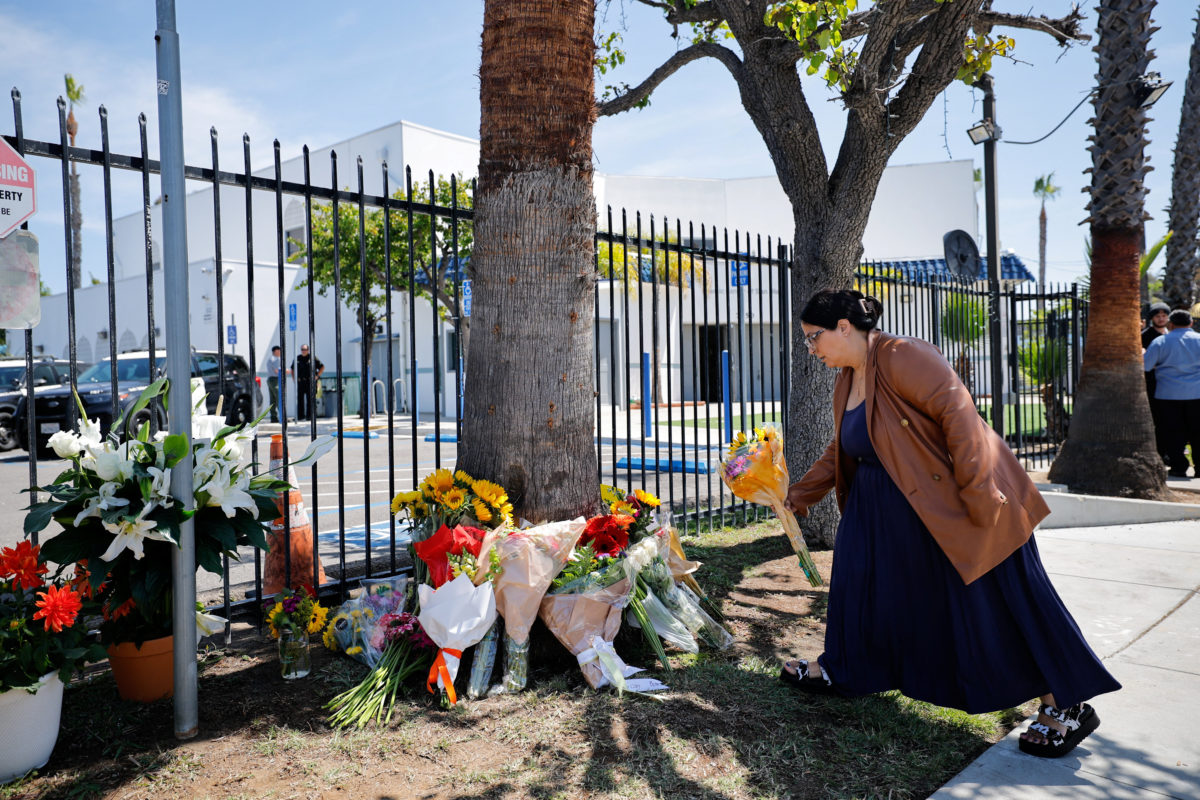
Our world is filled with joys and sorrows. It is important to acknowledge both. The ancient Chinese philosophical concept of Yin and Yang certainly exists. It is how we greet each occurrence that determines how it will affect our private lives, if personal, or make an imprint upon humanity if an incident becomes known to the public. Surely, the tragic death of 5 people at the Islamic Center of San Diego has registered in our hearts and minds, not only as a hate crime, but as a crime against the ideal that our democracy holds of a society free to worship as we please and to peacefully assemble.
What is called for at this moment?
Bishop Budde, of the Christian faith and Rabbi Shankman of the Jewish faith responded by speaking up for their Muslim brothers and sisters who are suffering; not only due to the death of their fellow congregants but also the loss of their treasured safety in practicing their religious tradition of prayer within their mosque. They knew that all faiths are now at risk and that we must stand up for one another – that any act of violence on one community’s house of worship injures us all. They affirmed their friendship “with those across the wide spectrum of religious life,” and further affirmed “to promote and protect each faith tradition’s rightful place” in our society.
I encourage us all to thoughtfully read their statement and their suggestions. More importantly, see how we can reach across the abyss of religious silos we sometimes create and to extend the hand of friendship with an invitation to join in our diverse religious celebrations and experience our diverse religious cultures.
For it is only that when we give…we receive. When we receive, we say, as in Psalm 23:5 in the Bible, “My cup runneth over.” And when we feel more abundance, love, compassion and kindness than we can possibly hold – then we naturally, in turn, want to give back. Giving love and extending the hand of friendship is truly the impetus to embracing each man and each woman as our beloved brother and our beloved sister in the Family of Humanity.
Link to Budde and Shankman Statement: https://mariannbudde.substack.com
This blog post is the expressed opinion of its writer and does not necessarily reflect the views of Tysons Interfaith or its members.
Contributed by Rev. Dr. Trish Hall
Alignment is a deep, rich, complicated — yet ultimately simple — concept. Each of us is called to ask: Am I congruent? Do my opinions and actions reflect my stated beliefs, values and principles?
It is a clear question, yet it often yields murky answers.
It is easy to equivocate, to layer in subjectivity and make the inquiry unnecessarily complex. Often unconsciously, we rationalize. Many of us answer, “most of the time,” granting ourselves permission to drift. We may feel momentarily justified, even as a quiet discomfort lingers. Others compartmentalize, allowing deviations when circumstances seem to warrant them.
We live in a world of opinions. We form them from fragments of information gathered around us, filtered through experience, beliefs, values and principles. At times, current circumstances override that filtering process.
As humans, we are meaning-making beings. We interpret and label our experiences. When our opinions arise through alignment with our values and principles, we call it responding. When they bypass that alignment, we call it reacting.
An opinion, then, is a viewpoint shaped by judgment — one that may or may not be grounded in our deeper commitments.
How we show up in the world is the out-picturing of those opinions. Often, they have little to do with objective, verifiable facts. They are interpretations — personal, subjective and influenced by culture, upbringing, emotion, education, values and beliefs.
For many of us, this means our opinions are transient — here today, revised tomorrow.
Because we are continually evolving, it is healthy not to hold our opinions too tightly. Ernest Holmes, author of The Science of Mind, encouraged us to “remain open at the top.” We are meant to grow, adapt and experience ourselves more expansively as Spirit.
Similarly, Walt Whitman wrote in Song of Myself:
“Do I contradict myself?
Very well then I contradict myself,
(I am large, I contain multitudes.)”
Growth invites contradiction. It is not failure — it is expansion.
My father was a fascinating contradiction. He was a scientist and engineer that was forever seeking new possibilities, revealing new adaptations of everything materially and scientifically extant. In contrast, his beliefs were often staid – locked in the past. We were fascinated by the apparent inconsistency between his scientific bent and his attachment to his expressed beliefs. The cliché, “I’ve made up my mind, don’t confuse me with fact,” was dogmatically imbedded and scientifically irrelevant.
Self-reflection and the Evolution of Belief
Over time, we come to see that our beliefs change. What once felt like absolute truth often gives way to deeper understanding. Our current perspective reflects accumulated experience — and it, too, will continue to evolve.
The question is not whether we are growing, but in what direction.
Are our values expanding alongside our awareness? Are we moving toward greater alignment with a more inclusive understanding of life? Are we cultivating a deeper capacity to embody Spirit in action?
Several years ago, Dr Kenn Gordon offered a message that challenged listeners to examine whether they were truly “walking their talk.” He invited a direct and honest inquiry: Do our opinions reflect our values, or merely the noise of our environment?
That question can be transformative.
It calls us into congruency.
It also evokes a cultural touchstone. In 1966, amid social upheaval in the United States, Peter Scholtes wrote They’ll Know We Are Christians by Our Love. It affirmed “We are one in the Spirit … one in the Lord” and called for unity through lived demonstration of walking and working together, guarding one another’s dignity. Identity exhibited by embodiment rather than an imposed ideology.
A natural extension of that idea might be: They will know we understand Oneness by our love.
The question remains: Would they?
Opinions, Truth and Alignment
Opinions are often expressed casually, even flippantly. They may feel true in the moment without being grounded in deeper truth.
That distinction matters.
When we shift from asking, What do I think? to What is actually so? we enter the territory of integrity. We begin to ask whether our thoughts, words and actions are aligned with what we claim to value.
This requires accountability.
It also requires clarity in language. Words such as integrity, honesty and authenticity may not hold identical meanings for everyone. For the purpose of this reflection, integrity can be understood as the integration of:
- Honesty — truthfulness
- Consistency — alignment across situations
- Moral coherence — behavior reflecting values
At its root, integrity speaks to wholeness. Nothing fragmented. Nothing out of alignment.
A person living in integrity acts in accordance with their values, even when it is inconvenient, and takes responsibility for their choices.
Recognizing Misalignment
When we notice misalignment, self-judgment often follows. We may accuse ourselves of hypocrisy or fall into harsh self-criticism.
Alternatively, we may avoid awareness altogether, moving through life in oblivion – not recognizing our inconsistencies.
Neither response is particularly useful.
Misalignment is not evidence of failure; it is an invitation to awareness.
It is also important to recognize that behavior communicates more honestly than words. If there is a gap between what we say and what we do, others will trust what they observe.
The question becomes: What are we truly communicating?
Living Among Difference
Being human among other humans is not always easy.
We encounter differences that may feel unfamiliar, even unsettling. Yet difference is not inherently dangerous; often, it is simply not yet understood.
Each of us is shaped by distinct cultures, experiences and traditions. Developing authentic connection across those differences requires intention, humility and a willingness to listen.
Many spiritual traditions share a concept of Oneness, though expressed in different ways. That shared principle can serve as a meeting point — if we approach it without assumption.
Too often, we believe we are communicating clearly when we are not. We assume understanding where none exists. True communication requires more than shared words; it requires shared meaning.
Returning to Congruency
Across traditions — including Judaism, Islam, the Bahá’í Faith and New Thought — there is a consistent understanding: human beings fall short, and there is always a path of return.
Incongruence is not a destination. It is a point of awareness.
- In New Thought, it signals misalignment in consciousness and invites practices such as prayer and meditation.
- In Judaism, it is understood as “missing the mark,” with a path of return through acknowledgment and repair.
- In Islam, integrity is upheld alongside divine mercy, with return grounded in remorse and renewed intention.
- In the Bahá’í teachings, integrity develops over time, supported by reflection, prayer and conscious effort.
Across these perspectives, a shared pattern emerges:
Integrity is the aim.
Incongruence is the teacher.
Return is the practice.
A Personal Practice
One of the principle tenets shared by many faith traditions around the world is Oneness. It is my most highly held principle – the conviction that the Divine Creator is expressing Itself as all that is. I have a passion for Peace which, for me, is the natural outcome of fully embracing Oneness. To the best of my ability, I live kindness and compassion anchored in my values of integrity, honesty, and authenticity. To remain as keenly aware as possible of whether I am maintaining congruency, I use this simple (though sometimes not easy) practice by regularly asking myself:
- Am I in alignment right now? Is how I am showing up in alignment with my beliefs and my feelings? [Often my feelings are what tip me off that I am out of alignment.]
- What do I know to be true here? What would integrity look and feel like in this moment?
- I soften into acceptance (with no guilt or shame) when I have deviated from my desired way of being, knowing that realignment is always available.
- I become clear in my observation of what may have caused me to veer off, and select one small, honest step I can take now that reflects my deeper truth.
- I remember!
I remember …We are not asked to be perfect—
only to be willing to return, again and again, to what is true.
This blog post is the expressed opinion of its writer and does not necessarily reflect the views of Tysons Interfaith or its members.

Contributed by: Lois Herr — First Church of Christ, Scientist, McLean
Many people set aside time in their day for prayer, reflection, or meditation. As a Christian Science practitioner, I often find inspiration in daily audio reflections, called the Daily Lift, and presented by members of our church.
I found a recent Daily Lift to be particularly meaningful. It is entitled No bullies in the kingdom of heaven. In this segment, Diane Collins from Radnor, Pennsylvania, shares her experience with a bully at her office. Drawing on her spiritual understanding, Diane shares her belief that the kingdom of heaven is already within each of us, and that accepting this can help us deal with all of life’s challenges.
The Daily Lift is comprised of audio presentations contributed by Christian Science church members worldwide – with the majority coming from the U.S. This particular Lift will remain on the website for thirty days before being retired.
May this segment bring you peace and encouragement.
This blog post is the expressed opinion of its writer and does not necessarily reflect the views of Tysons Interfaith or its members.
Contributed by Andra Baylus, The Meher Baba Spiritual Community
Ridván is a twelve-day festival celebrated by the Baha’i Faith to commemorate the period in 1863 when Bahá’u’lláh, the religion’s founder, publicly declared his mission as a Messenger of God.
- The Great Festival: It is considered the holiest period in the Baha’i calendar.
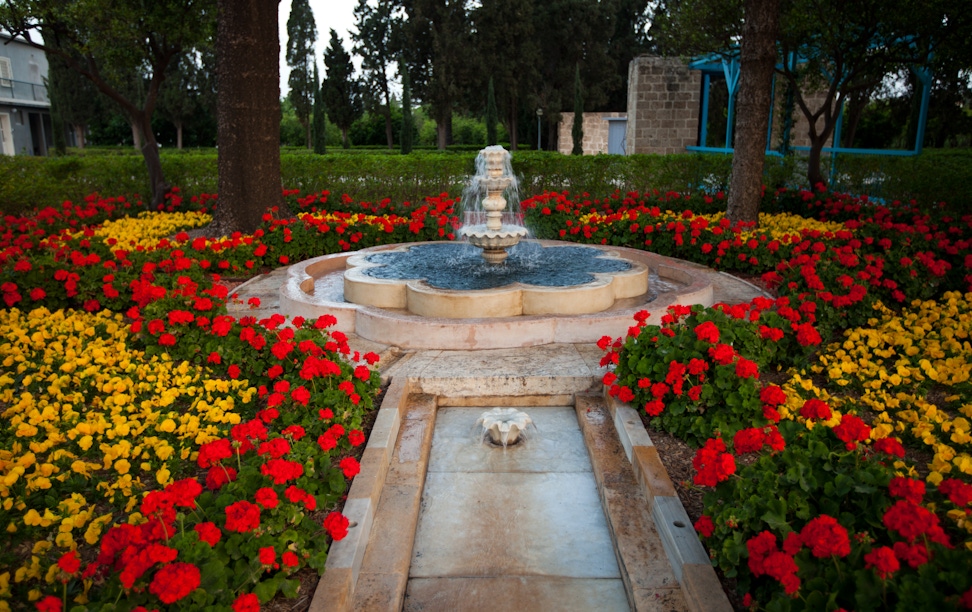
- The Garden of Ridván: The event took place in a beautiful rose garden on the banks of the Tigris River in Baghdad, which Bahá’u’lláh named Ridván (meaning “paradise”).
- Spiritual Transformation: It marks the transition from a period of exile and sorrow to one of hope and the official birth of the Baha’i Faith.
- Origin: It represents a victory for the Bahá’í community, turning exile into a time of joy, spiritual renewal, and the public declaration of the faith.
Observance
The festival begins on April 21st and concludes on May 2nd. During this special 12 day period, the community gathers for prayers, celebrations, and the annual election of Baha’i local and national governing councils. Three specific days—the first, ninth, and twelfth—are the most significant and are observed as holy days where work and school are suspended. The 1st day is considered ”Declaration” ~ when Bahá’u’lláh publicly declared his mission as a Messenger of God. The 9th day is focused on, “Family Reunion” ~ when family and friends came to visit Bahá’u’lláh to say goodbye before he was exiled and the 12th day is termed, “ The Departure” ~ the day Bahá’u’lláh finally left for Constantinople (now called Istanbul).
Over the years, Bahá’u’lláh was exiled in many locations and finally established the Baháʼí World Centre in Haifa and Akka, Israel. Today, the Bahai community is spread across virtually every country and territory in the world.
This blog post is the expressed opinion of its writer and does not necessarily reflect the views of Tysons Interfaith or its members.
In a world where troubling news abounds, Tysons Interfaith is dedicating 2026 to highlighting “What’s Going Right.” Whether it is individuals, organizations or nations working to improve the lives of others and to build a just and peaceful future for all of us, there is always good news to be found.
We hope the following blog post will bring you encouragement and inspiration to make a positive difference in your own corner of the world.
————————————————————————-
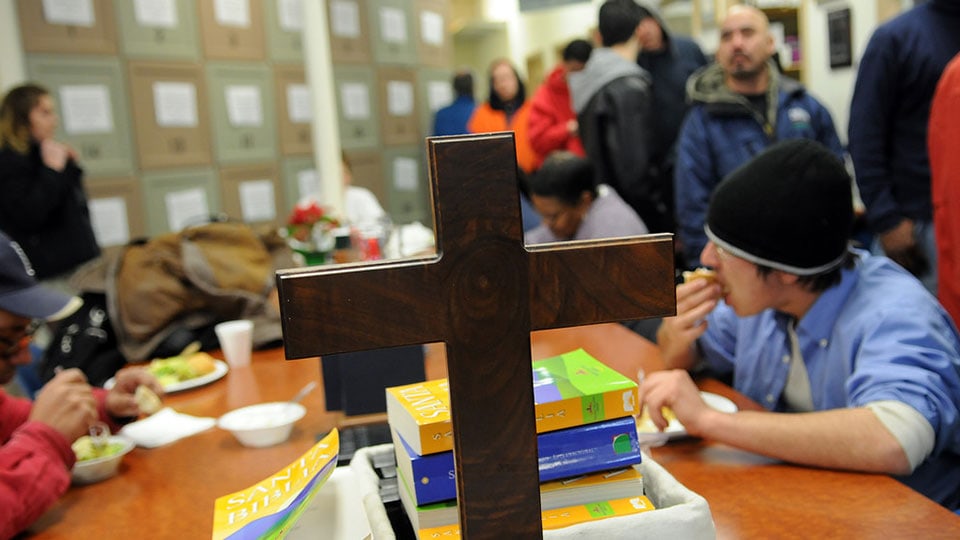
On any given day in Fairfax, Virginia, over a hundred people walk through the doors of The Lamb Center, regardless of the season. Some are regulars. Some are first-time visitors. Some are young. Some have jobs; some are jobless. Some have homes; some are unhoused. Some work full-time but still need food. Everyone who walks through these doors is our neighbor.
The Lamb Center (TLC) is a Christian ecumenical daytime drop-in center serving neighbors experiencing homelessness. We provide holistic support at no cost to guests, creating community, restoring dignity, and building pathways toward stability. Our services include meals, showers, laundry, AA meetings, pastoral care, daily Bible studies, weekly chapel services, case management, workforce development, and an onsite nurse practitioner and dental clinic.
So what’s going right at TLC? We are a community.
Last year, TLC welcomed more than 2,000 unique guests and recorded over 36,000 visits, neighbors returning again and again to a place that knows their name. We are sustained by more than 100 partner churches, thousands of individual donors, and hundreds of active volunteers. But the numbers only tell part of the story.
On any given day, you’ll find staff and case managers working alongside volunteers from across the region, and guests who’ve been coming for years sitting next to someone walking in for the first time. Our community encompasses everyone from those in immediate crisis to those well on their way to thriving. This wide-reaching approach is intentional. The tent is big. That’s by design.
All are welcome to our services. All are welcome to case management, workforce development, and the programs that build pathways toward stability. And all are welcome to our social programs too; bowling outings, an art program, community events where guests aren’t just recipients of care but participants in a shared life together.
This is TLC’s Christ-centered approach in practice. Our Christian identity isn’t a filter; it’s the foundation. The conviction that every person bears inherent dignity, that no one is beyond reach, that showing up matters: these beliefs animate everything we do. All are welcome, because Jesus is at the center.
That conviction is also what sustains the work when the work is hard. Beacon Landing, TLC’s new permanent supportive housing development set to open later this year, is evidence of that; 54 units of deeply affordable housing, built through years of persistence and community trust. It exists because the center holds.
The community. The constancy. The Christ at the center of it all. That’s what’s going right at The Lamb Center.
To learn more, visit https://www.thelambcenter.org/
This blog post is the expressed opinion of its writer and does not necessarily reflect the views of Tysons Interfaith or its members.
Contributed by Yerusalem Work
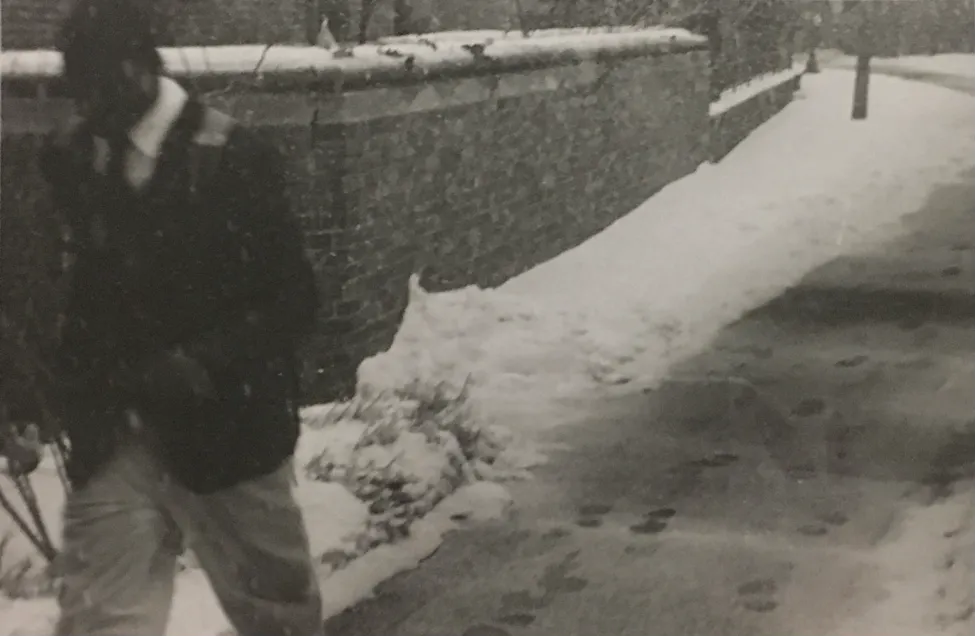
My favorite photograph is called Long Walk to Freedom.
I, Yerusalem Work, captured the shot in the winter during my college career as I was walking into the African-American Cultural Center. I looked behind me with my camera in hand and grabbed this moment: a slice of life. I witnessed a man of color wearing a suit-and-tie, marching on a walkway in the snow with a backpack on. I immediately felt his struggle to make progress by pursuing an education and becoming someone, whose work was sought after.
The contrast of black-and-white, his footprints, the wall made of bricks, and the trees all stand out in this image revealing the tension between the natural world and man-made contexts. There’s a saying that education is the key, but they keep changing the locks. We’ve come a long way as a nation, but we have far to go before we achieve equity.
This photo through depth of field depicts a struggle to traverse a vast distance. Yet, it is a beautiful invitation to draw near. With this submission, I was a finalist in an international photography competition. I hope it is a source of inspiration and reflection for you.
Yerusalem Work, a creative writer and the membership director of the Congregational Library Association, has a heart for interfaith dialogue and is a passionate community builder. A holder of a master’s degree in library science and prolific author, she regularly blogs and self-publishes her writing. Her writing has been published in Muslim Matters, Islamic Horizons, and Tysons Interfaith. She considers it an honor and a pleasure to write on Islamic themes.
This blog post is the expressed opinion of its writer and does not necessarily reflect the views of Tysons Interfaith or its members.