

For Christians, we are about to enter the holiest week of the Christian year, aptly known as Holy Week. During Holy Week, Christians mark the events that took place in the last week of Jesus’ life. We begin with his triumphal entry into Jerusalem at the head of a peasant parade hailing his arrival. As the week progresses, we gather with Jesus and his disciples for the meal commonly known as the Last Supper. We watch in horror as Jesus is betrayed, arrested, tortured and then crucified. We sit in anguish with his friends in the midst of their shock and horror at Jesus’ death. And finally, we celebrate the miracle of resurrection and new life at the empty tomb on Easter Sunday.
We begin on Palm Sunday (March 28th, this year). On Palm Sunday, we remember Jesus’ return to Jerusalem. John Dominic Crossan and Marcus Borg have described Palm Sunday as a day of two processions. They write:
One was a peasant procession, the other an imperial procession. From the east, Jesus road a donkey down the Mount of Olives, cheered by his followers. Jesus was from the peasant village of Nazareth, his message was about the kingdom of God, and his followers came from the peasant class. They had journeyed to Jerusalem from Galilee, about a hundred miles to the north, a journey that is the central section and the central dynamic of Mark’s gospel. Mark’s story of Jesus and the kingdom of God has been aiming for Jerusalem, pointing toward Jerusalem. It has now arrived. On the opposite side of the city, from the west, Pontius Pilate, the Roman governor of Idumea, Judea, and Samaria, entered Jerusalem at the head of a column of imperial cavalry and soldiers. Jesus’s procession proclaimed the kingdom of God; Pilate’s proclaimed the power of empire. The two processions embody the central conflict of the week that led to Jesus’ crucifixion. [1]
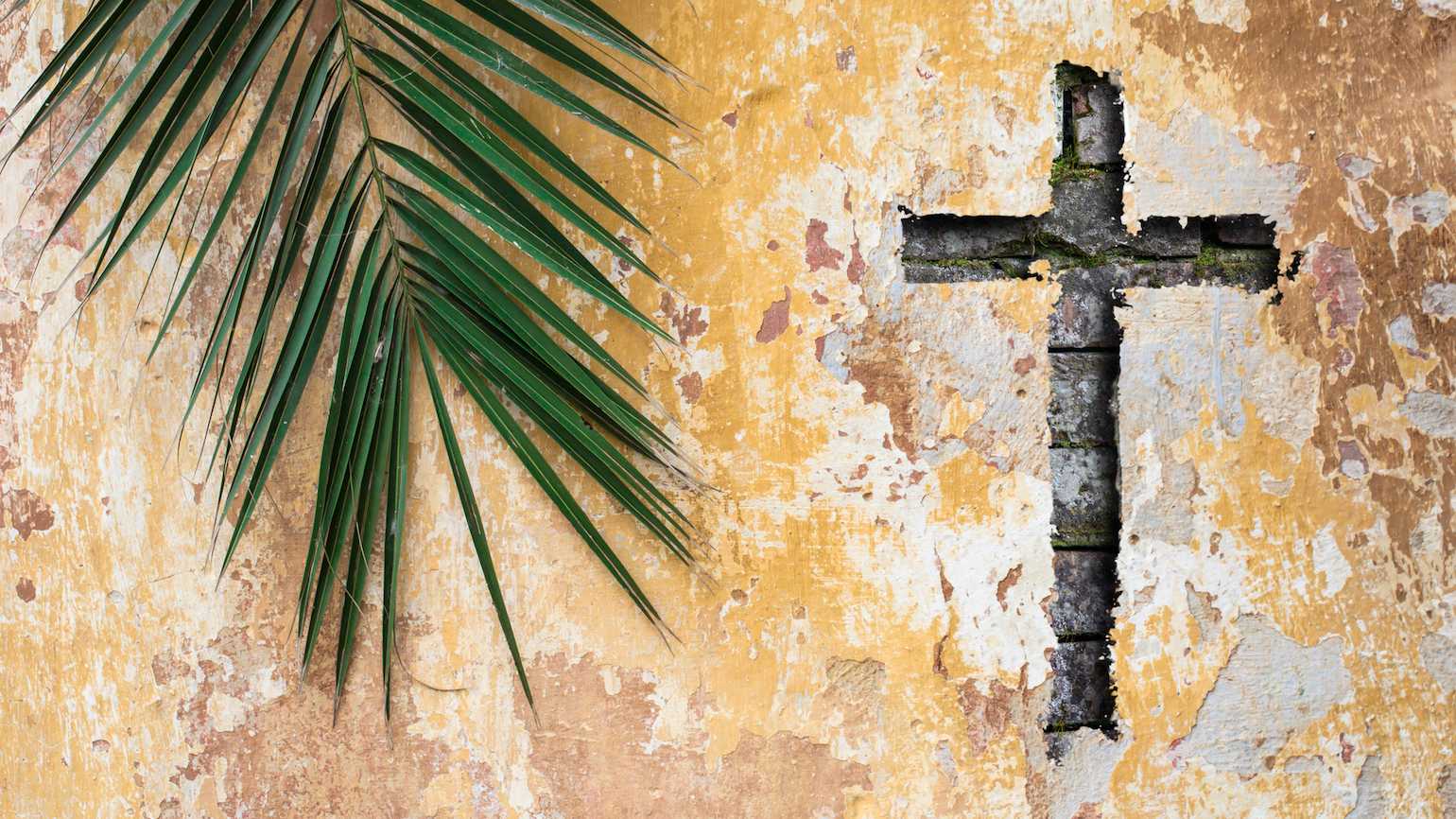
Pre-pandemic, many churches distribute palm branches to those who gather for worship. We wave our palm branches and declare, “Hosanna! Blessed is the one who comes in the name of the Lord.” This year, in the midst of the ongoing pandemic, churches are worshiping in a variety of ways. At St. Thomas, we’ll gather outside on Saturday evening and over Zoom on Sunday morning. Parishioners have been invited to pick up palm branches at church before the Sunday morning service.
In our individual devotions during Holy Week, many Christians read from John’s Gospel about the events that happen after Jesus’ triumphal entry. On Monday, we read John 11: 1-12. On Tuesday, we read John 12: 20-36. And on Wednesday, we read John 13: 21-32.
This brings us to Maundy Thursday (this year, April 1). Maundy Thursday remembers the last supper that Jesus ate with his friends before his death. The day gets its name from the Latin word mandatum or mandate. It comes from Jesus’ command (mandate) that his followers, “love one another as I have loved you.” You can read the whole of the Maundy Thursday story here.
One of the key moments on Maundy Thursday is when Jesus does something quite unexpected for a great teacher. Before Jesus and his companions gather to eat, Jesus wraps a towel around his waist and washes his disciples’ feet. Normally this task would have been done by a servant. Instead, Jesus humbles himself to take on this role – and teaches every Christian the key role that service to others plays in the Christian life.
Good Friday (this year, April 2) remembers the day that Jesus was crucified. It’s probably the most somber day in the Christian year. It seems counterintuitive to call a day that was filled with torture, suffering and death “good.” But Christians believe that Jesus’ death on the cross is ultimately a repudiation of death, evil, and sin. Worship on this day is somber and reflective. We pray. We contemplate the cross. And we share in the sorrow of Jesus’ death (even as we know what his first followers did not – that resurrection is coming).
On Holy Saturday morning (this year, April 3), Christians sit with the grief of Jesus’ death. Again, we know that Resurrection is coming, but has not yet arrived. Many Christians read of Jesus burial by Joseph of Arimathea in Matthew’s Gospel.
As the sun sets on Holy Saturday, Christians gather for what is known as the Great Vigil of Easter. From the earliest days of the Christian Church, Christians would gather in the dark on the night before Easter. A new fire is kindled, and an ancient hymn called the Exsultet, which sings of God’s glory would be sung. They would tell the stories of God’s saving acts in history – how God has always acted for justice and new life. Those who have been preparing for baptism were baptized. And as the sun rose on Easter morning, the first call and response of, “Alleluia, the Lord is risen! The Lord is risen indeed, Alleluia!” is heard. Most churches that celebrate an Easter Vigil now, begin at sunset, though I have participated in an Easter vigil that began in the dark at 4am on Easter Sunday.
Finally, on Easter Sunday (this year, April 4), we celebrate the unthinkable news that Jesus has been raised from the dead. Each of the Gospels (Matthew, Mark, Luke and John) tells the story a little differently, but they share remarkable consistency. And while there was no video camera to tell the story of how the resurrection occurred, we can see its truth in the transformation of Jesus’ first followers. In the coming days and weeks, they’ll undergo a profound transformation. They move from being frightened deniers of Jesus (like Peter after Jesus arrest) who are afraid and locked away (see John 20: 19-31) to fearless evangelists for the way of Jesus Christ (see Acts 2: 1-21).
The span of these eight days that stretch from Palm Sunday to Easter Sunday are truly my favorite days of the Christian year. In them, we walk a road that includes hope, community, betrayal, death and new life. If you’d like to learn more or experience one or more of these services, you are welcome to join us at St. Thomas Episcopal Church in McLean (via Zoom – links will be on our website on Monday March 29) or any of the Christian churches that are part of Tysons Interfaith. Click on the logos here to be connected to the congregation’s website.
.
[1] Marcus Borg and John Dominic Crossan, The Last Week: What the Gospels Really Teach About Jesus’s Final Days in Jerusalem (New York: HarperCollins, 2006), pp. 2-3.

In our Torah (the scroll with the first five books of the Bible penned by hand in Hebrew), one of the most important ideas is freedom. This includes the story of Passover, which begins in ancient times with Abraham, the first person to have the idea that maybe all of those little statues his contemporaries worshipped as gods were just statues. The idea of one God, invisible and all-powerful, inspired him to leave his family and begin a new people in Canaan, the land that would one day bare his grandson Jacob’s adopted name, Israel.
God made a promise to Abraham that his family would become a great nation, but this promise came with a frightening vision of the troubles along the way. “Your descendants will dwell for a time in a land that is not their own, and they will be enslaved and afflicted for four hundred years, however, I will punish the nation that enslaved them, and afterwards they shall leave with great wealth.”
In the years our ancestors lived in Egypt, our numbers grew, and soon the family of Jacob became the People of Israel. Pharaoh and the leaders of Egypt grew alarmed by this great nation growing within their borders, so they enslaved the Israelites. The Israelites were forced to perform backbreaking labor. The Egyptians feared that even as slaves, the Israelites might grow strong and rebel. So Pharaoh decreed that Israelite baby boys should be drowned to prevent Israelites from overthrowing those who had enslaved them.
But God heard the cries of the Israelites. God then sent upon the country that enslaved them ten devastating plagues, afflicting and destroying everything from their livestock to their crops.
At the stroke of midnight on 15 Nissan 2448 BCE, God released the last of the ten plagues, the killing of the firstborn. While doing so, God spared the children of Israel, “passing over” their homes, hence the name of the holiday.
Pharaoh’s resistance was broken, and he virtually chased his former slaves out of the land. The Israelites left in such a hurry that the bread they had baked as provisions for the way did not have time to rise. Hundreds of thousands of Israelites- men, women and children, were freed from slavery that day, and began their trek to Mount Sinai.
The Jewish holiday of Passover celebrates the liberation of the Israelites from Egyptian Slavery. Jews around the world celebrate this traditional eight day holiday every year. We have first and second night Seders. We eat Matzo instead of bread. We have first night and last night worship services.
The Hagaddah (Order of the Passover Seder) tells the story of our freedom. The Haggadah tells about how the Jewish people were slaves and then became free. Everyone at the table takes part in the Seder. Children are an integral part of the experience, bridging children and the adults who can bring a unique perspective to any Seder, as each year they participate with fresh eyes. Young people are still questioning, struggling, and wrestling with the themes that we experience during Passover as they contemplate their own journey toward adulthood. Adults question these themes as well, and many times write their own Seders to enhance and update their beliefs and add in current themes of freedom.
It is a mitzvah (commandment) to re-live this dramatic event, the emergence of the Israelites from slavery to freedom. Passover also opens each of us up to questions of freedom today. We discuss those who still are not free and how we might help them in their struggles. What WE can do to support those who are still not free- emotionally, physically… or otherwise.
In preparation for the holiday, Jews are commanded to rid their homes of leavened foods-including breads, rolls, bagels, cereals, pastas etc. It is traditional to donate unopened boxes of these foods to those who are hungry. Our congregation hosts a food drive every year collecting for area food banks.
Each year, all over the world, Passover is recalled with the ritual meal where participants of all ages read from a Haggadah. The Hagaddah (Order of the Passover Seder) tells the story of our freedom. The Haggadah tells about how the Jewish people were slaves and then became free. We may use different Haggadahs. Some may have finger puppets and guitars around the table, and some may use Haggadahs that came with Maxwell House Coffee forty years ago. Some read from new Women’s Hagaddahs and some from 21st century updated inclusive Haggadahs with new language and ideas. And some write their own that are just right for those coming to their Seders. Whatever Hagaddah is used, the basic story and many songs and prayers remain the same. The Hagaddah, the story of Passover is our script. We learn the customs, taste the foods, and retell the moments of this dramatic story that concludes in celebration after crossing through the Red Sea.
We begin the Seder by singing about how good and pleasant it is to dwell together. This year same as last year, many of us will still be getting together over Zoom with family and friends and will be calling these gatherings Z’eders as we are still socially distancing due to the COVID pandemic.
We continue, lighting the festival candles with a special blessing-praising God, the candles remind us we must help and not hurt, cause joy and not sorrow, create and not destroy, and help all to be free. We praise God for the gift of Life.
Many Seder meals begin with Matzo Ball Soup, Gefilte Fish, a Hard-Boiled Egg in Salt Water (to remember the tears that were shed, and the egg to signify new beginnings, before the actual meal begins.
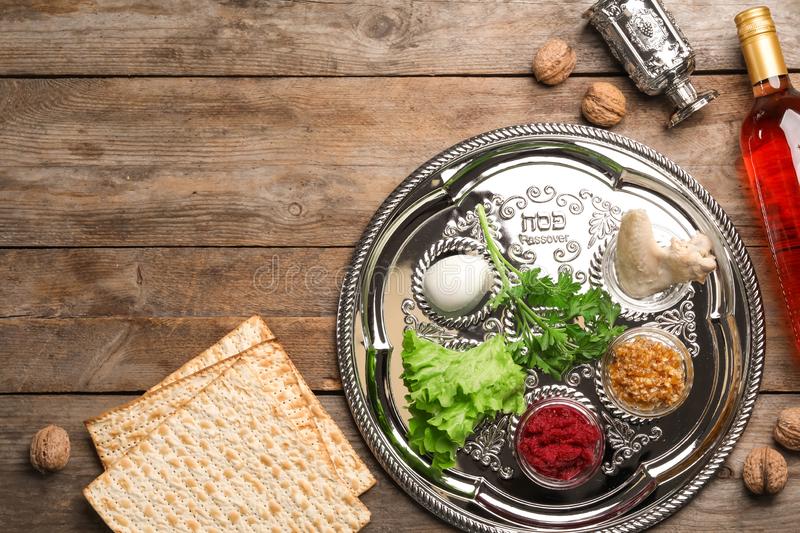
A Seder Plate in the center of the table includes ritual symbols of the holiday. These include a roasted lamb shank bone representing the Pesach sacrifice at the Temple in Jerusalem, recalling the ancient sacrifice of a paschal lamb in the Temple, bitter herbs/horseradish representing the bitterness of slavery, a roasted egg -symbolizing part of the sacrifice in the Temple in Jerusalem, charoset (apples nuts, cinnamon, honey and wine mixture)- representing the mortar and brick used by the slaves, Parsley- representing hope and renewal- this is dipped into saltwater to represent tears, again a symbolic reminder of the pain felt by the Israelites when they were enslaved. Unleavened bread called matzo is served in lieu of bread or rolls, honoring the bread that the Israelites took with them when they left slavery so quickly that it didn’t have time to rise.
We are commanded to eat matzo in lieu of leavened breads, bagels, muffins, rolls, pasta, etc. for the entire eight days of Passover. There are lots of fun recipes to make meals and snacks including chocolate dipped matzo, caramel toffee matzo, matzo pizza, matzo lasagna etc. The “middle matzo” on the table is usually hidden during the meal, for the children to find after the meal. It’s called the Afikomen. Whoever finds it, gets a prize!
- That God will Free us from the burdens of slavery.
- Deliver us from bondage.
- Redeem us with an outstretched arm.
- And Take us as God’s people.
Two thirds of the story of Passover is shared before the meal is served, with the remainder following the meal and closing with songs and laughter.
If the meal is to be “Kosher for Passover style” it is usually an all dairy, or all meat, meal. Regardless of whether the hosts keep kosher otherwise, meat and dairy are traditionally not offered during the same meal.
Traditionally, the first night Seder is celebrated in one’s home, and the second night Seder is more of a community Seder either at a synagogue, community center, or other larger gathering place. Again, our second night Seder will be online this year.
It is traditional to open one’s home up to those who have never been to a Seder, or have nowhere else to go for Seder, if you have room at your table.
Our temple (or Synagogue) is offering several activities during this eight-night holiday, including services, cooking classes, craft projects, a concert and weekday daily programing by our clergy.
For more information, please see our website www.templerodefshalom.org
Our Temple Rodef Shalom community wishes all who celebrate a “Zissen Pesach” (Joyful and Sweet Passover) and hope that this explanation is helpful to those who are not familiar with this holiday.
Tysons Interfaith Announces New Website
(Tysons, Virginia, March 23, 2021) Today, Tysons Interfaith announced the launch of its new website: https://tysonsinterfaith.org/
“We are very excited to launch this new platform as a community service for people who live and work in the Tysons area,” said Bill Larson, President of the organization. “The website features opportunities for worship, volunteerism, and assistance resources. It also features a blog, advocacy, and educational materials we hope will foster constructive community dialogue and advance the principles of diversity, mutual respect, compassion, and ethical engagement. The site also has a downloadable map, created in conjunction with Fairfax County, to help people find local houses of worship, parks, and other community resources.”
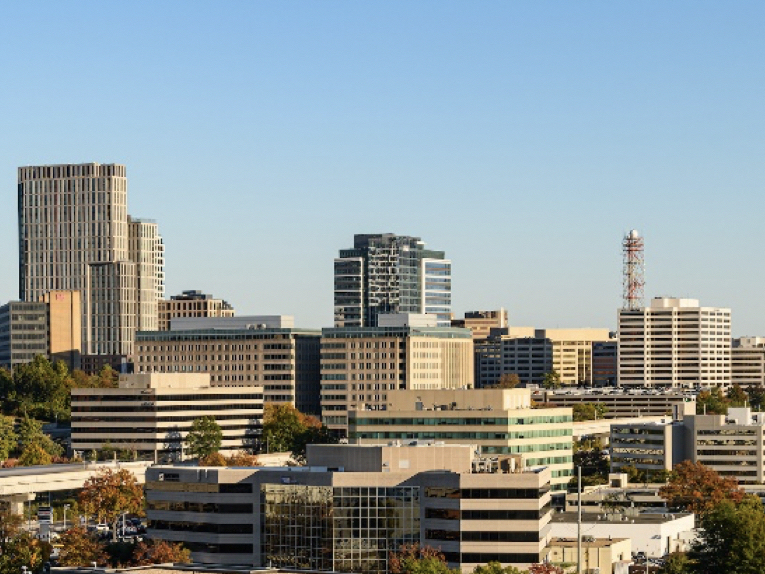
The Fairfax County Comprehensive Plan envisions Tysons as an urban center of 100,000 residents and 200,000 jobs by the year 2050. Said Larson, “We believe that those who live, work, and play in Tysons will enjoy higher quality of life through the public services, spiritual growth, and community service opportunities available to them through the diverse faith traditions and houses of worship surrounding Tysons. Since there is currently no physical space available for worship or spiritual practice in Tysons, Tysons Interfaith is creating a virtual space where people can learn of public services available, plug in to their personal faith tradition, or explore options for their own spiritual growth or public service.”
Larson continued, “By working together, we have learned that people of different faith practices and spiritual traditions share many values and enjoy working together to better our community. We invite congregations, groups, and individuals to join in this unique opportunity to build a vibrant, Tysons community that is welcoming for all.”
Tysons Interfaith, a 501(c)(3) Corporation, was founded in 2013 to promote interfaith understanding, spiritual growth, and human connection in the rapidly growing community of Tysons, Virginia. For further information, please email info@tysonsinterfaith.org or call 703-244-3252.
.
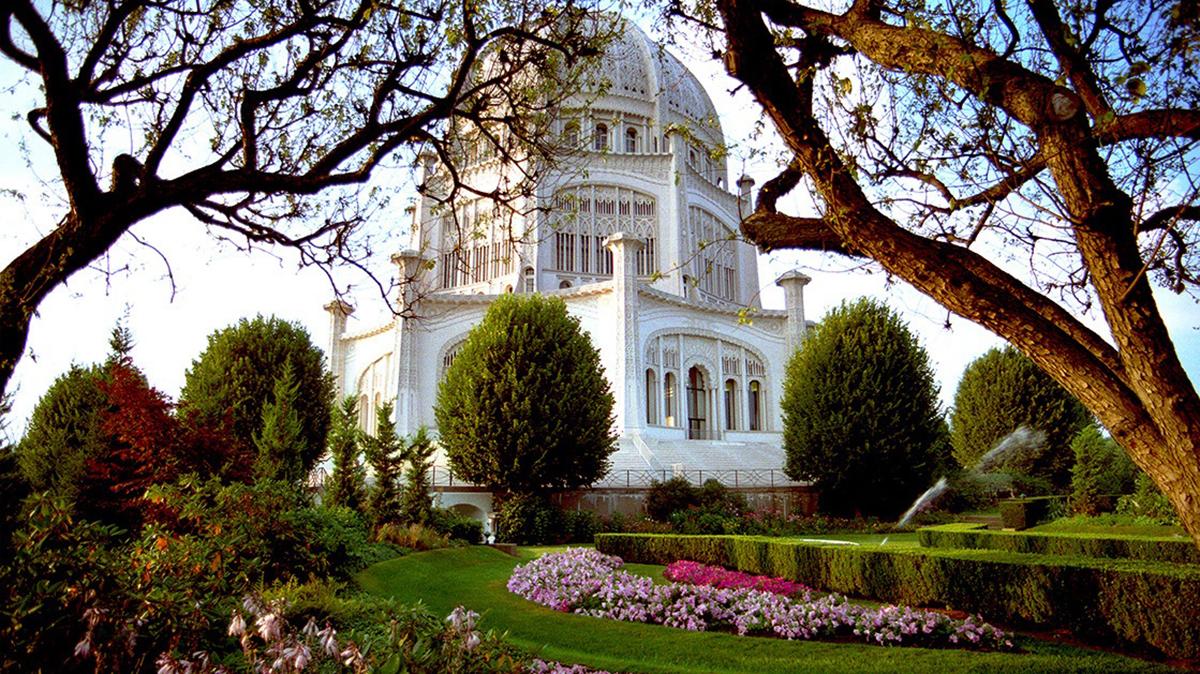
Probably many people know that Easter and Passover occur in the spring, but spring is also a time of sacred observation for people of the Baha’i Faith.
March 20- 21 are the Baha’i Holy Days of Naw-Ruz, the Baha’i New Year. Naw-Ruz coincides with the spring equinox and is an ancient Persian festival celebrating the “new day.” For Baha’is it marks the end of the annual nineteen-day fast and is one of the nine holy days of the year when work is suspended, and children are exempted from attending school.
Also in the spring is the Festival of Ridvan. This annual Baha’i festival commemorates the twelve days when Baha’u’llah, the founder of the Baha’i Faith, publicly proclaimed His mission as God’s messenger for this age. Elections for local, national, and international Baha’i institutions are generally held during the Festival of Ridvan. The first day (April 20 or 21), the ninth day (April 28 or 28), and the twelfth day (May 1 or 2) are celebrated as holy days when work is suspended, and children are exempted from attending school.
To learn more about the Baha’i Faith, please visit: https://www.bahai.org/
This blog post is the expressed opinion of its writer and does not necessarily reflect the views of Tysons Interfaith or its members.