


Contributed by Rev. Dr. Trish Hall
Have you ever felt totally out of control—like a cartoon character clinging desperately to a wildly spinning object? Or as if you were possessed by some external force, only to discover that the force was actually inside you? At times, emotions can feel like being sucked into a vacuum—one that swirls everything in its path with no regard for what remains standing.
Emotions are powerful. They can cripple or empower. They can paralyze or energize. And during times of upheaval—when what once felt safe and predictable has been overturned—we may forget that we hold within us the capacity to redirect that force. We can transmute emotional chaos into purposeful energy. We can pause, ask, How am I to serve?—and then listen for what wants to emerge through us.
We humans are fascinating creatures. We work relentlessly to make sense of our world, especially when it stops making sense. When life turns upside down, we fight to restore equilibrium—to reestablish a reality where up is up and down is down. We are meaning-making machines, trying to reason our way through the unreasonable.
Often unconsciously, we construct stories that explain why what feels wrong isn’t really wrong—or why it must somehow be justified. We can sustain these narratives for a while. Eventually fatigue sets in. Beneath our explanations we discover fear: fear that life will never return to “normal” (if such a thing ever existed). We grieve the loss of what once anchored us. And for many, anger rises—often directed toward whoever or whatever we believe caused our losses or threatened our sense of safety. Others turn inward, sinking into despair or depression.
This emotional mélange describes the inner world of countless people right now.
Yet there is another remarkable quality woven through our fear, grief, and anger: resilience. It is our survival instinct—the deep intelligence that keeps us moving forward even when certainty dissolves. Emotions themselves are part of that intelligence. They are not flaws in our system; they are the system—internal alerts signaling that something is out of balance, that we no longer feel safe or oriented.
When these alarms sound, our bodies constrict. We feel compelled to defend ourselves and those we love. We cling tightly to the life we once knew, even while doubting whether equilibrium can ever be restored. And yet, paradoxically, it is often in these very moments of instability that our greatest inner strength is revealed. Crisis has a way of calling forth capacities we did not know we possessed.
Many of us were taught to categorize emotions as “good” or “bad.” But emotions are neither. They are intelligent signaling mechanisms—information carriers. What matters is not the emotion itself, but how we interpret and use the information it provides.
Emotional data deserves discernment. Our feelings are filtered through personal history, cultural conditioning, and unconscious bias. Five people can witness the same event and experience five entirely different realities. Likewise, our emotions do not always reflect objective truth. Add to this our innate tendency toward confirmation bias—the inclination to notice what confirms what we already believe while filtering out contradictory evidence. It becomes clear why emotions can feel so convincing in spite of lacking accuracy.
Because we assume something to be true, our emotions react in anticipation of that assumption being fulfilled, reinforcing the belief and strengthening the emotional response. This feedback loop can trap us—unless we pause long enough to examine it.
When we release the habit of labeling emotions as good or bad, a deeper understanding becomes possible. Emotions are energy. And energy can be directed.
Anger, for example, can be paralyzing—or it can be a source of immense strength. We can hand our power over to it, allowing it to rage unchecked, or we can harness its energy to challenge systems that no longer align with our values. The difference lies in conscious choice.
So the real question becomes: Are we willing to remain victims of our emotions, or are we ready to work with them as allies? Are we frustrated enough with being overwhelmed that we are willing to reclaim our power?
Personal transformation is not for the faint of heart. It requires courage, commitment, and a willingness to step into the unknown. Imagine how different life could feel if you were no longer imprisoned by your emotional reactions. Freedom begins when we learn to redirect emotional energy rather than suppress or discharge it.
Fear, grief, and anger each arise from a perceived loss—and each contains an embedded calling.
Fear emerges when the structures we trusted collapse—when our ability to discern what is safe feels shattered, and we believe ourselves powerless against forces beyond our control. Grief surfaces when the loss feels final—when hope dims and helplessness deepens isolation. Anger arises as a demand for change, an eruption of pent-up energy seeking movement and expression. Frustration often speaks through anger, which—when channeled consciously—can be profoundly constructive.
To uncover the wisdom within these emotions, we must ask a different question: What would I rather experience? This shift in perspective opens a powerful truth—we already possess what we need to change direction. While we cannot control how others respond or whether the world conforms to our desires, one thing is absolute: when we change, our world reorganizes around that change.
This realization is profound. When we declare “enough is enough” and draw upon our inner strength, we discover that we are not broken—we are latent potential waiting to be activated. As Mother Teresa reminded us, “Not all of us can do great things. But we can do small things with great love.”
Within fear lies the desire to rebuild trust and restore connection. It calls us toward community, collaboration, and service—toward groups that identify needs and work together to meet them.
Within grief lives empathy—the capacity to sense what others are enduring. It invites us to nurture, to accompany, to bring tenderness where there has been harm.
Within anger resides the energy for change. Mobilized anger becomes action: marches, advocacy, prayer circles, meditation gatherings, visible stands for justice and healing. Mobilization simply means movement—transforming frozen rage into purposeful engagement. Healthy anger requires healthy outlets.
Each of these emotions carries transformative potential. Grief can deepen compassion and meaning, allowing sorrow to be felt without drowning in it. Fear can sharpen discernment, draw us into presence, and cultivate trust rooted in clarity rather than denial. Anger can bring focus, agency, and healthy boundaries, helping us identify what must be protected or changed.
The invitation is ours: to choose conscious outlets and step into action.
One way to begin is through reflection. Recall people or situations that have brought out your truest self. Who were they? How did they show up? What about them called to you? These attractions are not accidents. They signal alignment. Something within you recognizes something possible.
Allow images of work, service, or volunteer opportunities that embody these qualities to surface. Compare their attributes with what brings you joy. Then invite the emotional energy that once held you captive to fuel engagement—especially in forms of service that involve giving of yourself.
Research consistently affirms what many of us intuitively know: when we give from the heart, we receive profound benefits. Volunteering is associated with reduced anxiety and depression, increased life satisfaction, greater emotional resilience, enhanced social well-being, and improved overall quality of life. Emerging research even suggests links between consistent community engagement and slower cognitive aging.
Perhaps most importantly, service shifts our orientation from self-absorption to being a beneficial presence.
Our emotions are not obstacles to overcome. They are invitations. When we listen deeply, redirect wisely, and act courageously, fear, grief, and anger become pathways—not prisons—guiding us into lives of meaning, connection, and purpose.
This blog post is the expressed opinion of its writer and does not necessarily reflect the views of Tysons Interfaith or its members.
Contributed by Susan Posey, Redeemer Lutheran, McLean
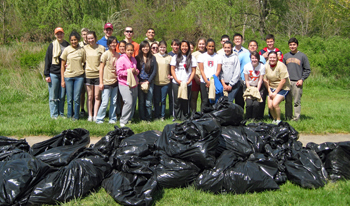
A local volunteer group, Fairfax Tree Rescuers, has launched an initiative called the Fairfax Partnership for Regional Invasive Species Management (PRISM). They will be holding a number of removal events throughout Fairfax County the week of November 8 through 16, 2025.
Volunteers are asked to register for the events and to wear long sleeves, closed toe shoes and insect repellant. Tools from home, such as loppers, clippers and pruning saws are welcome, but no power tools, please. For a complete list of the PRISM events this week and to register, please visit: www.fairfaxprism.org/upcoming-events. You can also sign up for their newsletter.
The Fairfax County Park Authority also has a volunteer program for invasive plant removal on its properties. You can learn more about the program at www.fairfaxcounty.gov/parks/invasive-management-area.
Care for the environment is just one of the values held in common by the faith traditions of Tysons Interfaith. To learn more about Tysons Interfaith and about local interfaith events, please consider signing up for our monthly newsletter at LINK.
This blog post is the expressed opinion of its writer and does not necessarily reflect the views of Tysons Interfaith or its members.

Contributed by: David Joyner, Britepaths
Britepaths is a Tyson’s area non-profit that develops sustainable solutions to stabilize low-income working families, builds resilience through financial literacy and mentoring, and provides seasonal support to families in need.
A critically important service Britepaths provides for struggling Fairfax County neighbors is the Emergency Food Support program.
Every donation, whether monetary or in the form of a gift card, directly assists individuals and families facing temporary crises by providing them with necessary household and personal hygiene products and a gift card for groceries. This crucial support allows recipients to purchase essential groceries and find relief during their challenging times, allowing them to focus on stabilizing their situation. Each contribution ensures that we can continue to provide timely assistance to those experiencing hardship in our community
Client Quote: “Good afternoon, the reason for writing is to thank you endlessly for all your help for my family with those gift cards for food purchases. It helped me a lot to solve my economic situation in purchases since I am a single mother with 3 daughters and two grandchildren, and I appreciate it very much for such valuable help for my family. From our God, we wish you to receive many blessings and that it is he who always guides and enlightens them to continue with such beautiful work. The gift cards helped a lot to alleviate my expenses and improve my economic situation. Thank you from the bottom of my heart.”
Britepaths’ 40th Anniversary Gala: We invite you to join us for an inspiring evening of community spirit and philanthropy at Britepaths’ 40th Anniversary Gala! Celebrating four decades of offering vital support to Northern Virginia residents in crisis, this milestone event honors Britepaths’ commitment to stabilize families, foster personal empowerment, and support the needs of children.
Scheduled for Friday, September 20 at 6 p.m. at Westfield Marriot Washington Dulles, the theme “Stronger Today, Brighter Tomorrow” reflects Britepaths’ journey of hope and empowerment. The gala will feature a captivating program with heartfelt testimonials from those whose lives have been transformed by Britepaths. Your presence and generosity will help Britepaths continue fostering stability and resilience in our community. Let’s come together to reflect on Britepaths’ journey and envision an even brighter future, visit britepaths.org/40gala.”

This blog post is the expressed opinion of its writer and does not necessarily reflect the views of Tysons Interfaith or its members.

Contributed by Stephen Wickman, St. Thomas Episcopal
Members of St. Thomas Episcopal (a founding congregation of Tysons Interfaith) have created a vegetable garden. We are delighted that our garden is starting to yield fresh produce that we are delivering to SHARE of McLean, which is housed at another Tysons Interfaith congregation, McLean Baptist Church.
Our earlier labors of tilling, erecting a fence, purchasing and planting the vegetables, and the on-going weeding and watering are yielding green peppers, squash and cucumber blossoms, little green tomatoes and green beans that have sprouted from seed. We also have eggplants, okra, sweet potatoes and more. Marigolds add cheerful color and act as a natural insecticide.
One of our volunteers had this to say:
“The picture below is a picture of what the Bible calls “first fruits” (e.g. Leviticus 23:10). The Hebrew word translated, “first fruits” is bikkurim which literally means “a promise to come.” Our four peppers are small in number but a beautiful promise of what is to come. I took our first fruits to SHARE. The woman who received them said, ‘They’re beautiful!’ She was thrilled. Ah, the first fruits are creating the fruit of the Spirit: love, joy, and wellbeing.”
We are grateful for SHARE and for St. Thomas’s garden volunteers whose labors of compassion are benefiting our brothers and sisters who are in need of food.
To see a recent post about the garden on Facebook, please visit: https://www.facebook.com
This blog post is the expressed opinion of its writer and does not necessarily reflect the views of Tysons Interfaith or its members.
Contributed by: Dr Trish Hall, Center for Spiritual Living, Metro
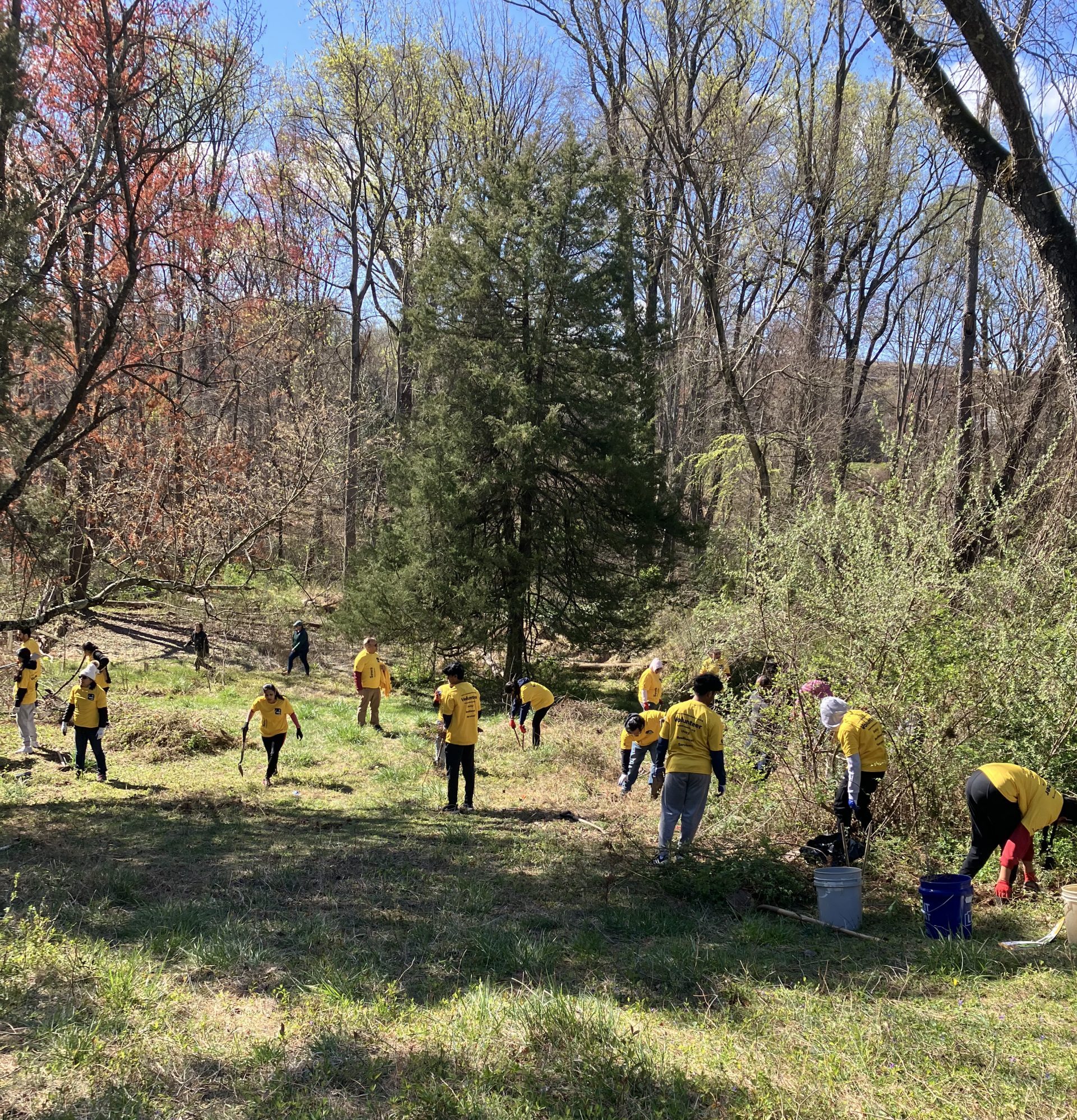
Photo: SEWA International Volunteers Working in McLean Hamlet Park on April 6
Isn’t “inextricability” (incapable of being disentangled), a great word? Simply, we cannot get away from one another. The effects any of us have on the environment – on everyone and everything – affect us all directly and indirectly. What we do turns back on all of us. In the Judeo-Christian Bible, Cane asks, Am I my brother’s keeper? The answer is “Yes!” We are our brothers’ keepers and our sisters’ and mothers’ and fathers’ keepers. Everything each of us does impacts everyone, just some more than others.
The solution I am proposing is simple yet I do not claim it will be easy, although it could be. Since we are inextricably entangled in everyone else, the solution is a massive shift of consciousness. A shift at the systemic level that declares in words and more importantly in actions, that we care. We care about the environment. We care about one another. We care about the world we are leaving to our offspring. Simply, WE CARE! Some who declare that this approach is not simple, may even claim it is impossible. Believing that all things are possible, I don’t accept that perspective. I am confident that it not only is possible, it is sustainable! And attainment of sustainability requires the commitment and follow through of each person who cares!
There are millions of people and myriad programs that are doing great work and so long as their commitment and energy hold out, they are sustainable. Fortunately, new recruits come along that are dedicated and step in when those in the trenches fatigue. They are valiant, amazing people. I laud them and applaud them. So long as the supply of new people does not wane, those programs will continue.
Some, perhaps many, avowed environmentalists spend more energy focused on what other people are doing or not doing that damages the planet, than on doing something about the environment. Because of the crises cropping up on so many different fronts, this is critical work. Again, it is only sustainable so long as new crops of dedicated people continue to show up. Truly, we all need to take a stand against the violators, big and small.
I am inviting people to address the crisis at the systemic level. We need to dig deep and address the consciousness that is not only allowing the contamination of our environment, it is fostering and nurturing it. We live in a “throw away society,” that condones a disposable mentality. The ordinary, day-to-day insults to our environment result from a consciousness that stopped washing dishes. Instead, whether plastic or paper, throw it away and someone (bless the disposal facility personnel) will clean up after the general malaise and laziness. Alas, there are millions of people who simply drop their trash wherever they are. A few rationalize that what they are dropping in the streets and parks is biodegradable. Some don’t care at all. They apparently assume that the clean-up fairy will come along behind them and fix it. Some don’t even care whether it is cleaned up.
The big violators must be called out! We know we must be a clear stand for stopping the harm they are perpetrating yet feel that stopping those entities is so huge that all our feelings of inadequacy arise. Rather than remaining in a state of paralysis, I choose to turn to what I/we can do. By releasing the sense of overwhelm on the huge scale, we have more energy to devote to what we can do … and there is always something that each one of us can do to change the world and help heal the planet.
We can conserve energy by stopping finger pointing and blaming on the local level, join with others and pick up after the thought-less members of society before we drown in others’ waste. Tysons Interfaith and many other organizations do park and highway cleanups applying critically needed Band-Aids that are not ongoing remedies. They are short term and again, so long as new volunteers show up to replace burned out ones we can maintain. But maintaining is not sustaining.
A shift of consciousness is required for us to switch to a truly sustainable solution. There are valiant souls who are already taking this approach, and there are those who complain but do not act. To be sustainable, it is critical for us to embrace a “both/and” approach. There are those who educate about the fragility of our environment. Often, they and their students are the ones picking up after the contaminators. It requires a shift in consciousness from “why should I pick up after someone else,” to “it pleases me to have a pleasant environment, so I’ll pick it up.” It calls us to commit to events like river and park clean ups and even closer to home … perhaps the trash in front of the neighbor’s house.
This is where “inextricability” comes in. We cannot be separated from one another … our beings cannot be disentangled.
The indigenous peoples around the world have always known and taught their offspring that we are inseparable from our environment and from one another. Traditionally, they honor Oneness … they honor Mother Earth and all of her inhabitants. We are our brothers’, sisters’, mothers’, fathers’ and strangers’ keepers.
Whether we like it or not, we are responsible for one another. Let’s remind ourselves that we are all spiritual beings. Brene Brown defines spirituality as, “…recognizing and celebrating that we are all inextricably connected to each other by a power greater than all of us, and that our connection to that power and to one another is grounded in love and compassion. Practicing spirituality brings a sense of perspective, meaning, and purpose to our lives.”
When we immerse ourselves in the awareness of Oneness taking care of our planet and its inhabitants is no longer a burdensome responsibility. It becomes a celebration of interconnectedness and an opportunity to uplift the awareness of others. It is our opportunity until others learn and embrace their responsibility. The big question then becomes, “how are we to shift the consciousness of the world?” When I phrase it that way, it does feel immense and overwhelming. Let’s “chunk it down to bite size pieces.”
As Jana Stanfield declares in her song, “All the Good” … “I cannot do all the good the world needs, but the world needs all the good I can do.” We each must ask ourselves, “what small thing can I do?” and then do it consistently so that it grows. One of the easiest things is to embrace the concept of being an “exemplar” – a person serving as a typical example or excellent model. People learn by observation. When we are each an observable example of how we value and care for Mother Nature we are teaching others how they, too, can change the world for the better. Whether they like it or not, we have then influenced that behavior and their choices. They are different simply by being exposed to us. The ultimate result is a shift of their consciousness.
So ask yourself, “If not me, who? If not now, when? Embrace Margaret Mead’s admonition: “Never doubt that a small group of thoughtful, committed citizens can change the world; indeed, it’s the only thing that ever has.”
Let’s change the world starting right now!
This blog post is the expressed opinion of its writers and does not necessarily reflect the views of Tysons Interfaith or its members.
Contributed by Susan Posey, Redeemer Lutheran, McLean
I recently had the opportunity to spend a few hours volunteering at the Food for Others food distribution warehouse located in Merrifield. What an eye-opening and rewarding experience!
Here is a short history of Food for Others from their website:
For the past 28 years, Food for Others has established itself as an essential part of Northern Virginia’s safety net. In our first year of operation, we served about 105 families per month. All these years later, we’re serving roughly 3,000 families per week and 3,900 students each week via the Power Pack Program (P3).
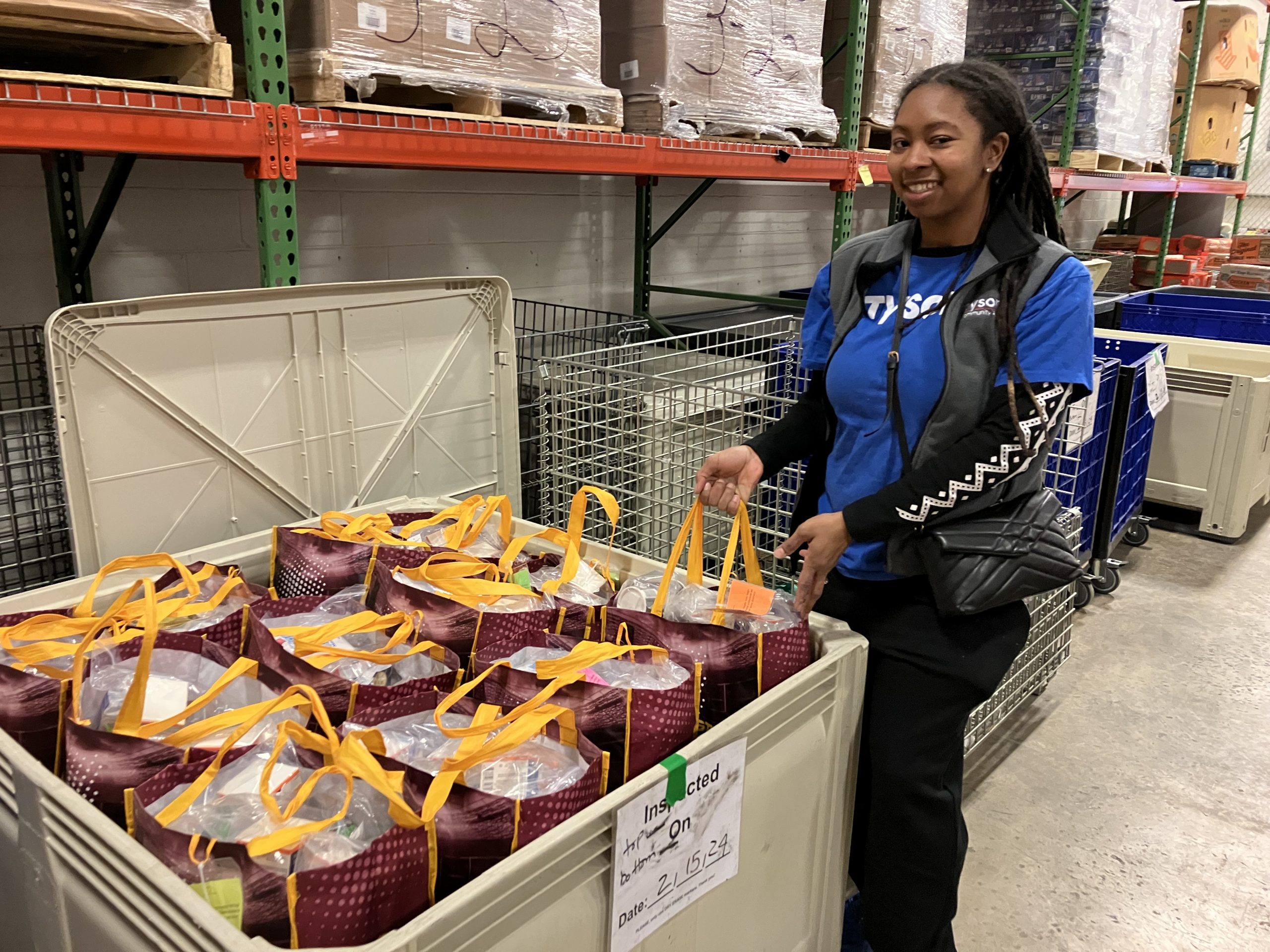
The day I was there, I joined with other Tysons Teammates volunteers to assemble P3 (Power Pack Program) food packets. These food packets are sent home with Fairfax County elementary school students on Fridays during the school year to supplement their food for the weekend. It was mind blowing to learn that almost 4,000 of these packets are distributed each week.
It is also mind-blowing and heartening to know that over 40% of the work done by Food for Others is performed by volunteers. They are so grateful for any help, whether it is in the form of donations or manpower.
To learn of the ways to get involved at Food for Others, please visit their website at: foodforothers.org/.
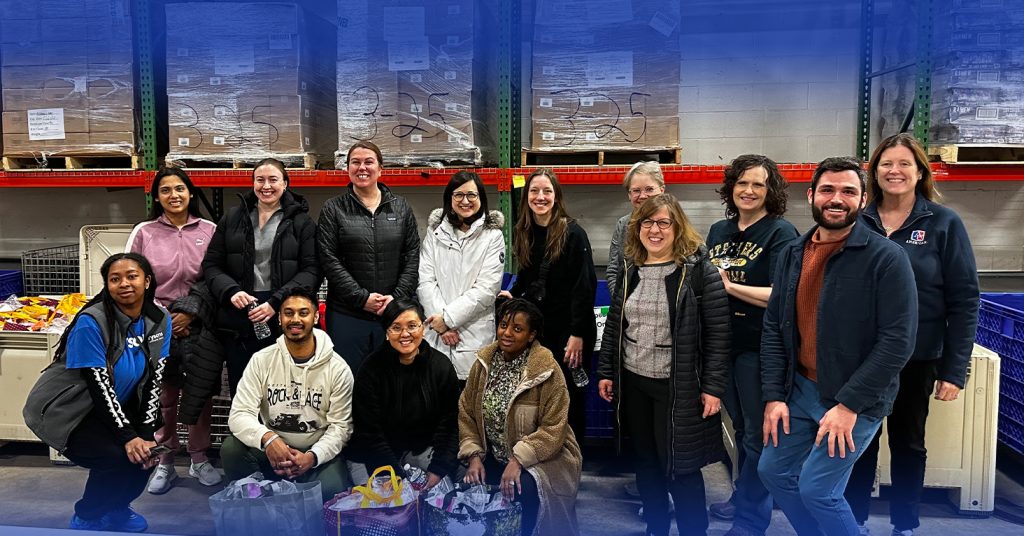
PS: I learned about this service opportunity through Tysons Teammates. If you are interested in helping to build “the fabric of the Tysons community” you can check them out, too.
This blog post is the expressed opinion of its writer and does not necessarily reflect the views of Tysons Interfaith or its members.
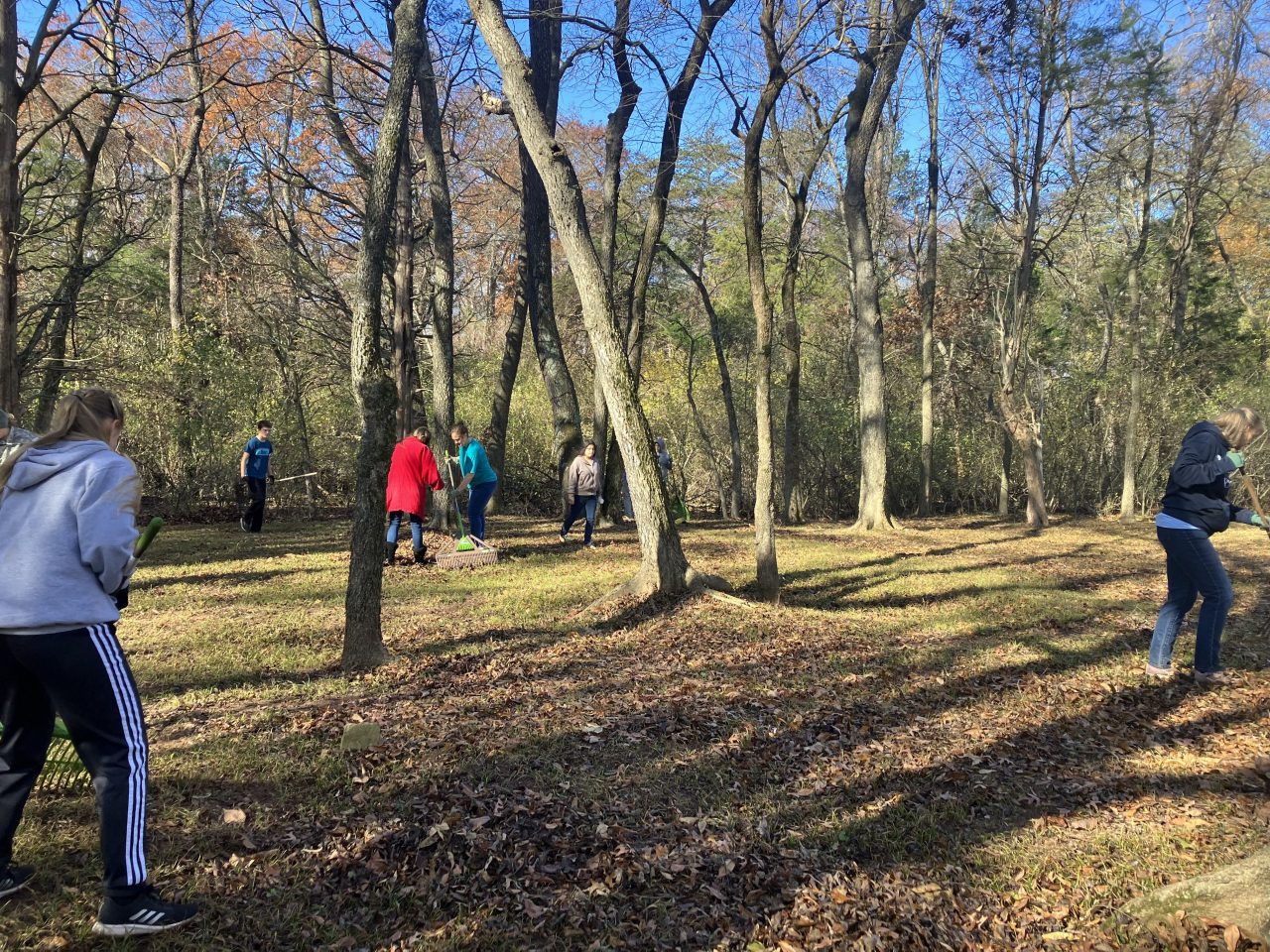
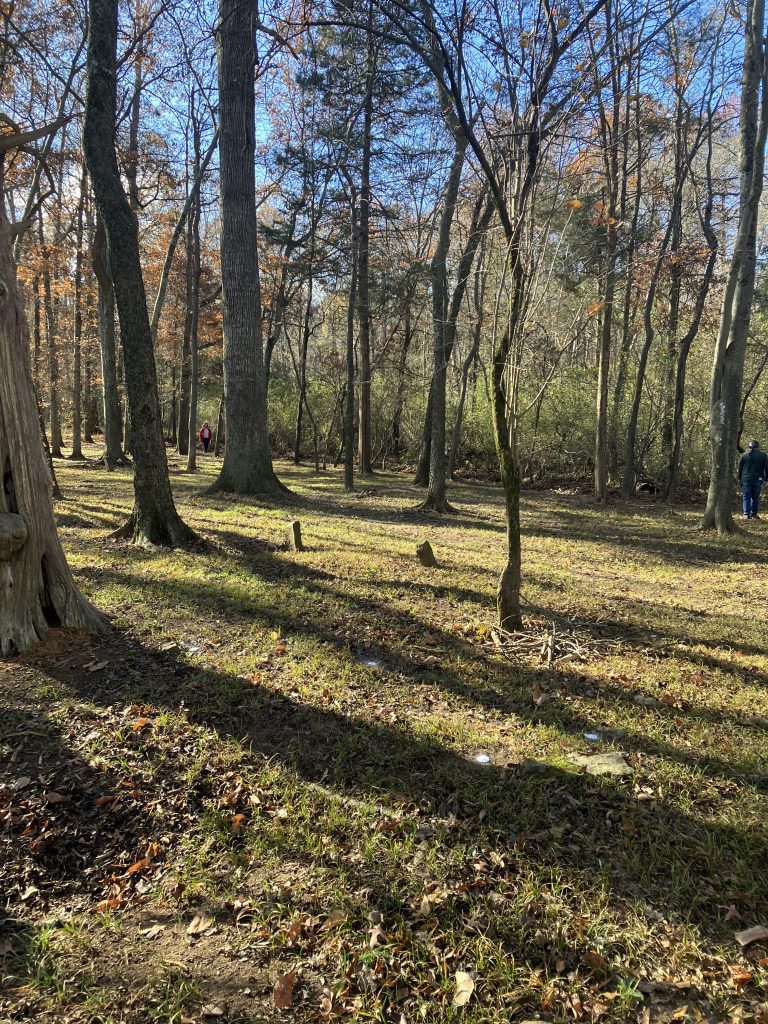
On a beautiful recent Saturday morning, approximately fifty people of different faith traditions — youth and adults — met at the Harris Family Cemetery at Bull Run Regional Park for a fall clean up. Members of Redeemer Lutheran, a Tysons Interfaith partner, were among the participants.
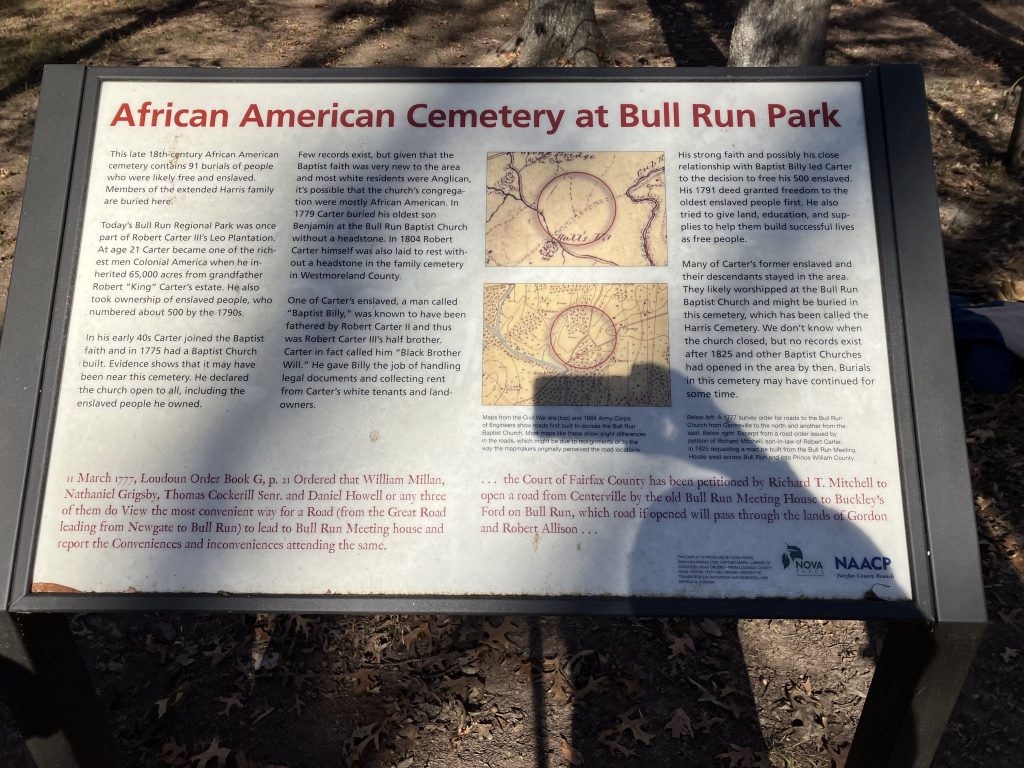
This final resting place of some ninety people, mostly the ancestors of emancipated slaves, was discovered in a wooded glen behind the Atlantis Water Park several years ago.
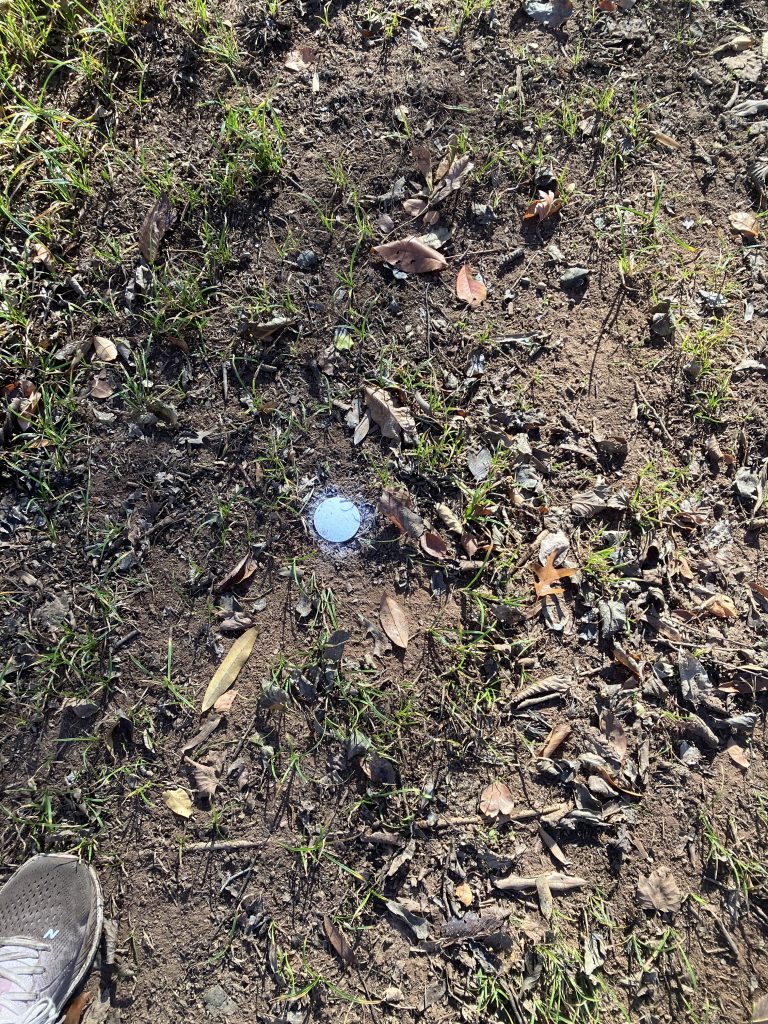
In addition to spreading mulch on the path leading to the burial area, volunteers raked leaves and cleared debris to uncover the white markers that mark the location of interred individuals. Other volunteers repainted these markers.
It was very uplifting to help maintain this sacred place, and to learn more about the history of this area and its remarkable people. I look forward to returning to this space.
To learn more about the cemetery, please visit https://www.novaparks.com/parks/bull-run-regional-park/things-to-do
This blog post is the expressed opinion of its writer and does not necessarily reflect the views of Tysons Interfaith or its members.
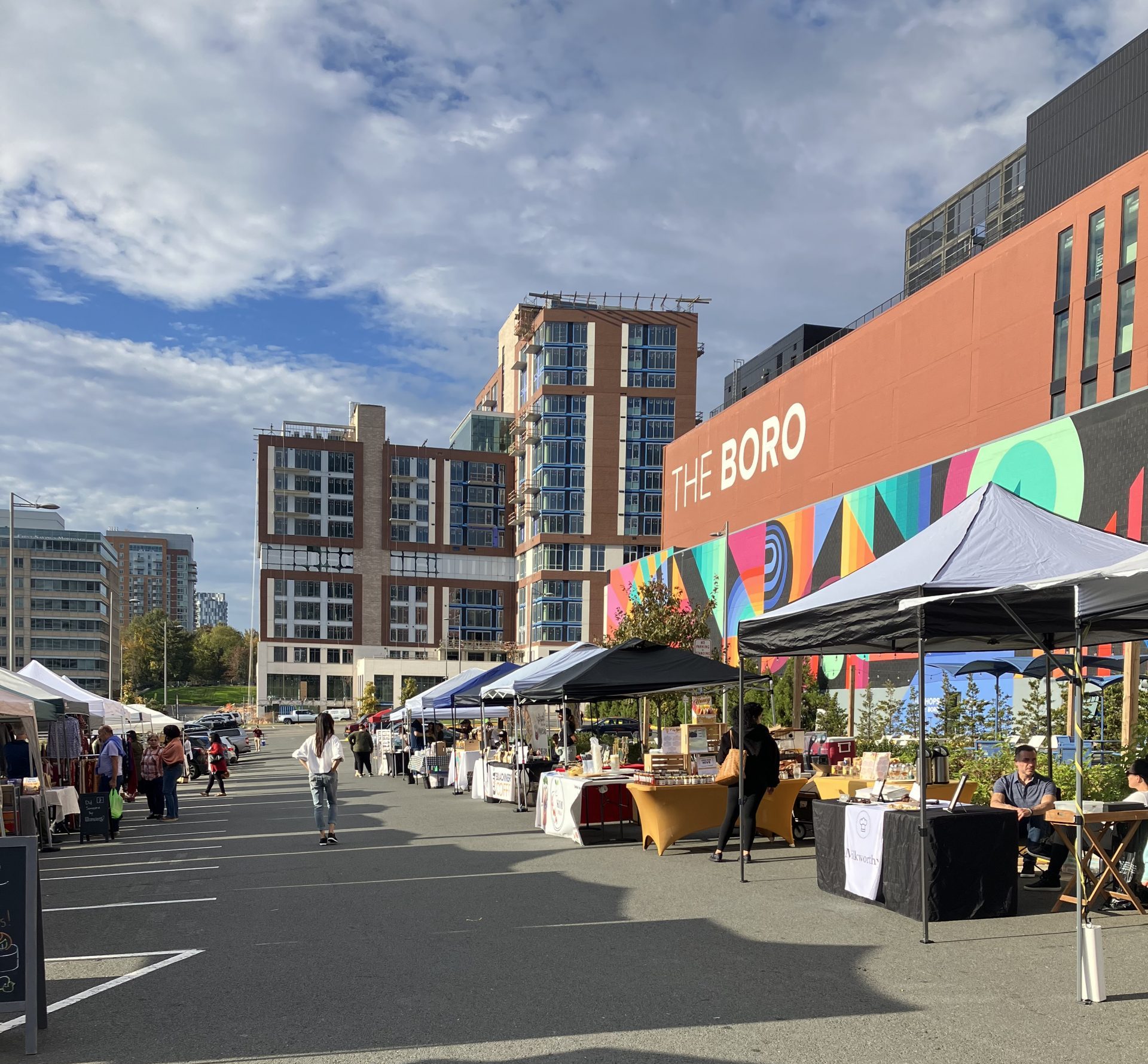
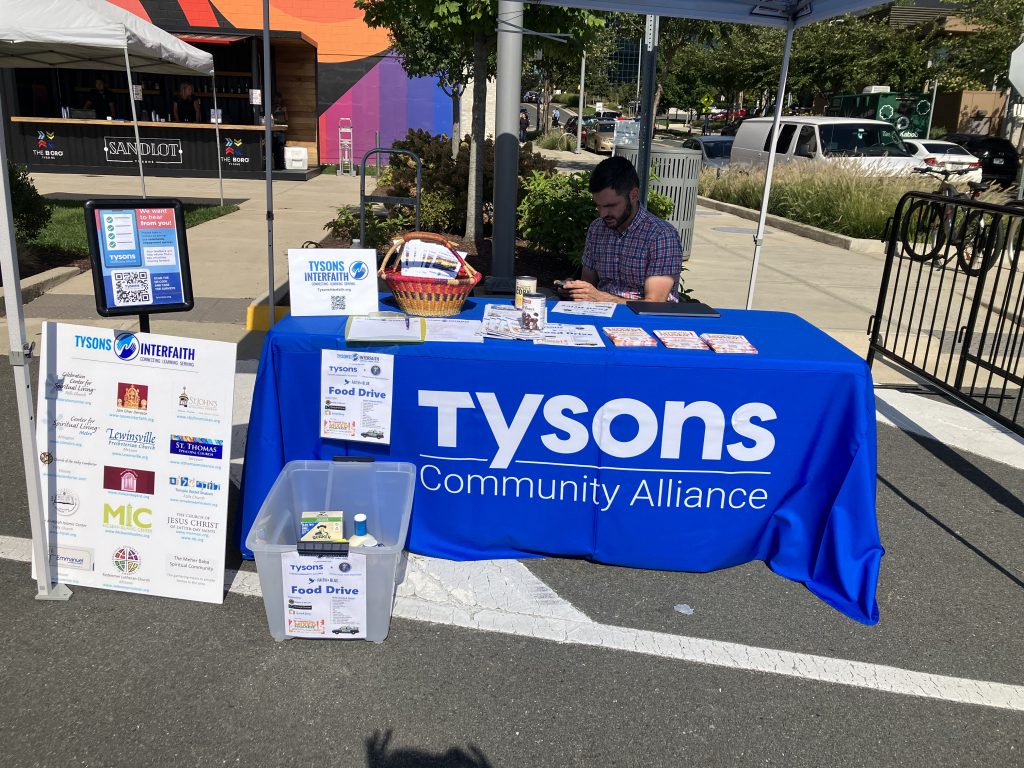
During September and October, Tysons Interfaith was honored to partner with the Tysons Community Alliance and the Fairfax County Police Department to sponsor a food drive at the fabulous Fall Mixed Market held on Wednesday afternoons at the Boro in Tysons.
Because of the generous donations of people who live and work in Tysons, we were able to make several deliveries of needed items to both SHARE of McLean and Second Story.
What a pleasure it was to mingle with people who live and work in the Tysons area, explore the varied vendor stands, enjoy beautiful fall weather and work with our community partners in support of these great non-profits who are doing such important work in our area.
I hope we can do it again next fall.
This blog post is the expressed opinion of its writer and does not necessarily reflect the views of Tysons Interfaith or its members.
Tysons Interfaith is pleased to present a series of blog posts highlighting local non-profit organizations who are doing so much to help our neighbors. Please consider helping these groups with your time and resources. For a list of nonprofit organizations working in the Tysons area please visit: tysonsinterfaith.org/resources/
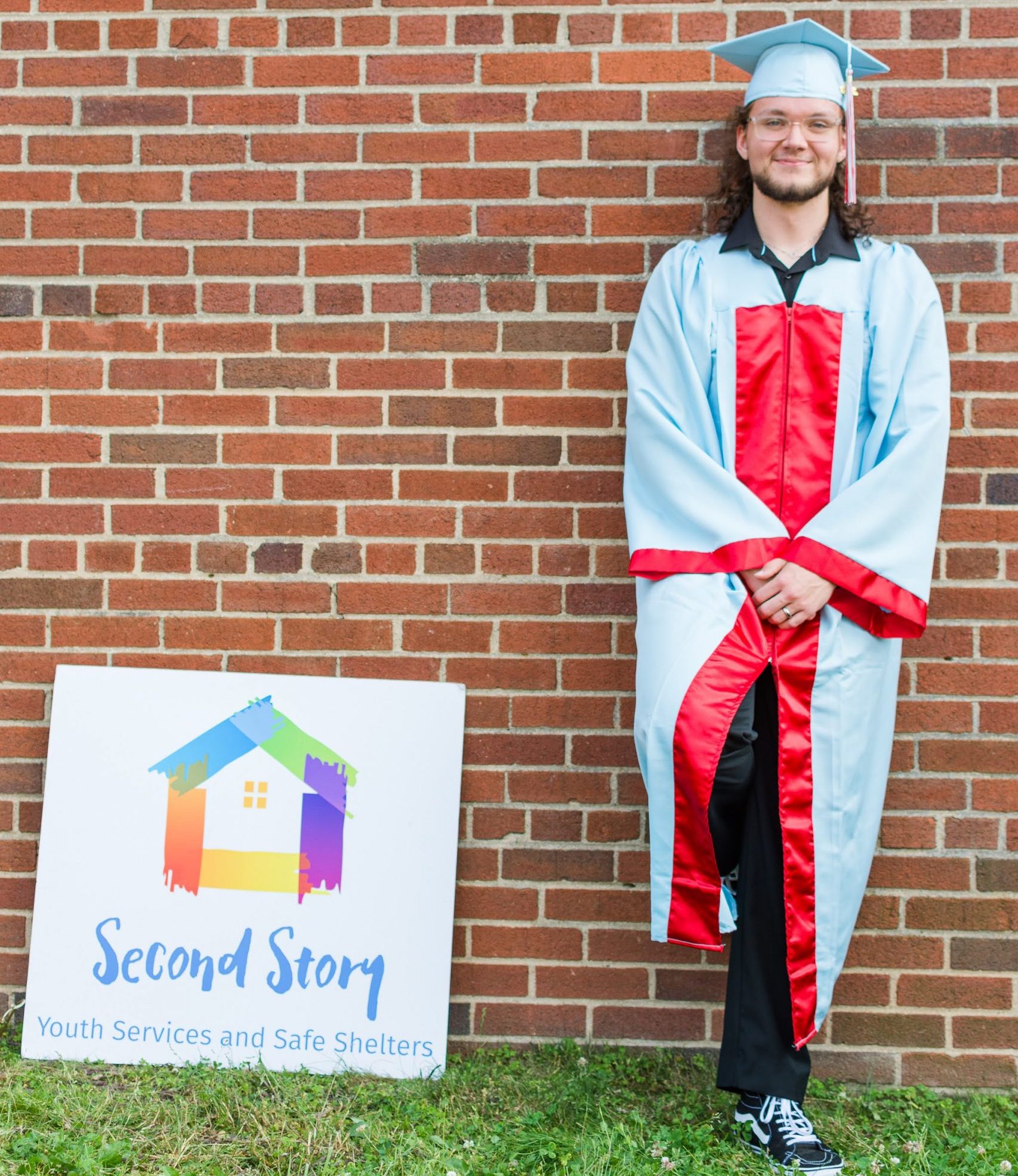
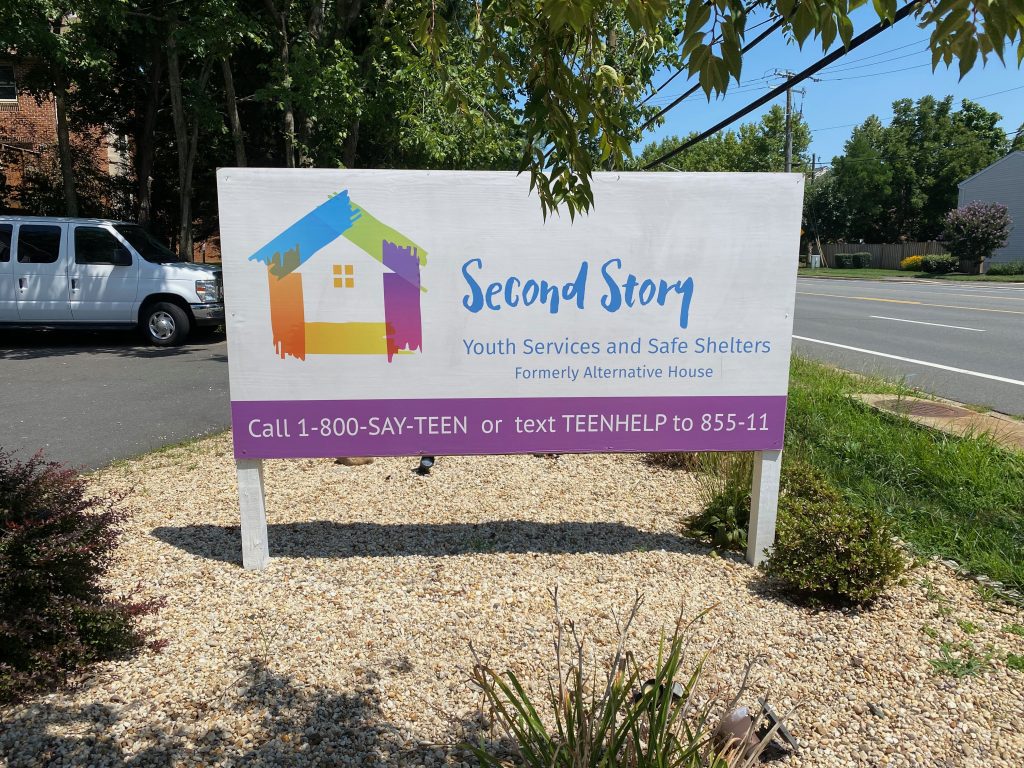
If you’ve ever driven past the bright purple door on Gallows Road with the welcoming sign out front, you’ve driven by Second Story for Teens in Crisis, an emergency home that provided 699 bed nights to youth in crisis last year. It’s the only emergency home or safe haven in Northern Virginia for teens ages 13 to 17. It’s also just one of the programs Second Story offers to youth and families in the region.
Learn more about Second Story by attending the annual Beacon of Hope Breakfast on October 25th, 2023, from 8:00 to 9:00 AM ET at Westwood Country Club in Vienna, Virginia. All are invited and registration is required. Learn more here: second-story.org/2023-beacon-of-hope-fundraiser/.
For more than 50 years, Second Story has been transforming the lives of children, youth, and their families by providing safe havens and opportunities to grow and thrive at critical turning points. Second Story’s vision is of a community where all young people are safe, live in a nurturing environment, and have the opportunity to reach their full potential. They’ve assisted more than 50,000 young people through their four programs.
- Second Story for Teens in Crisis provides a short-term place to stay for youth in crisis ages 13 to 17, plus food, clothing, and individual and family counseling. The staff also runs a 24-hour crisis-counseling hotline.
- Second Story for Homeless Youth helps high school students and youth experiencing homelessness with housing, case management, and life skills training.
- Second Story for Young Mothers offers long-term housing as well as life skills support, counseling, and assistance with basic needs for young mothers experiencing homelessness so they can learn to support themselves and their children.
- Second Story in the Community serves the communities of Culmore, Annandale, and Springfield through Family Resources Centers, Safe Youth Projects, and a Teen Center. They offer language, computer, health literacy, parenting, and financial planning classes, as well as tutoring, after-school support, and food distribution.
The true testament to Second Story’s work lies in the countless young individuals who have been given the opportunity to rewrite their life narratives, or their Second Stories. Last fiscal year, 120 youth had a safe place to stay, and some stayed for up to 18 months. Second Story also distributed 973 backpacks, provided 3,750 individual tutoring sessions, fielded over drop-in 26,000 consultations, and provided 12,309 food distributions.
There are many ways you can support Second Story’s mission.
- Give monetarily: second-story.org/givenow/
- Attend a virtual Open Door Session to learn more: second-story.org/get-involved/open-door/
- Follow Second Story on Facebook, Instagram, LinkedIn, YouTube, and Twitter @SecondStoryorg
- Visit Second Story’s website and sign up for the newsletter at second-story.org
- Listen to the podcast: second-story.org/podcast/
- Donate items: second-story.org/immediate-needs/
This blog post is the expressed opinion of its writer and does not necessarily reflect the views of Tysons Interfaith or its members.
Tysons Interfaith is pleased to present a series of blog posts highlighting local non-profit organizations who are doing so much to help our neighbors. Please consider helping these groups with your time and resources. For a list of nonprofit organizations working in the Tysons area please visit: tysonsinterfaith.org/resources/
What is Share?
- Share Inc. is a 501 (c) (3) non-profit organization. To see our IRS Form 990 annual financial reports, click here.
- Though we are not religiously affiliated, we were established in 1969 by a coalition of local faith communities to help meet the emergency needs of our neighbors in McLean and the nearby areas of Northern Virginia.
- We are an all-volunteer organization with no paid staff, no office, and no paid fundraisers, therefore, nearly all donations directly benefit our neighbors in need.
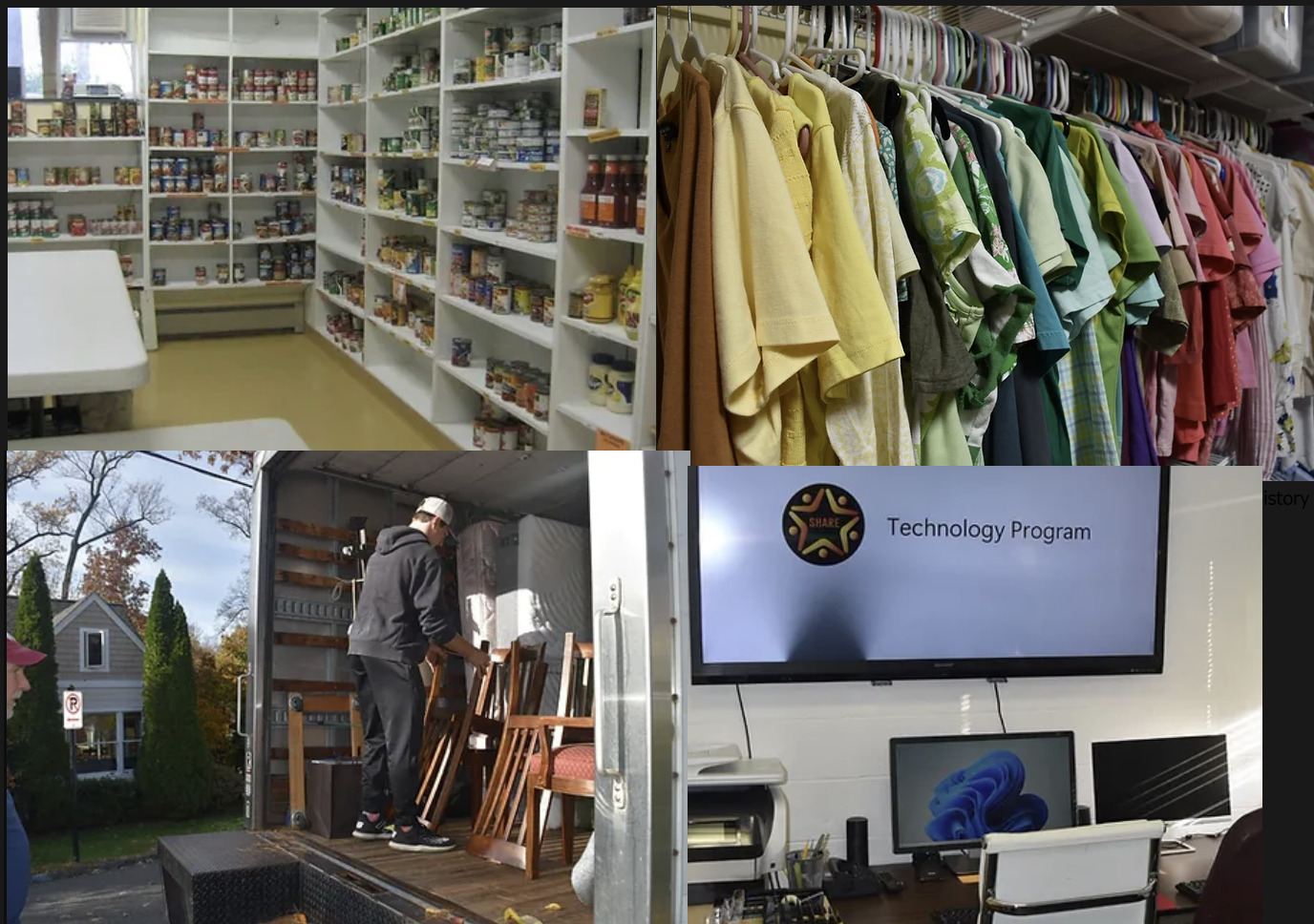
- Share assistance includes a food pantry, clothing room, furniture program and family assistance program.
- We are supported by generous donations from local religious congregations, community organizations, neighborhood businesses and individuals. Our food and clothing rooms are housed is space donated by McLean Baptist Church.
- It currently takes more than 1000 volunteer hours per month to run our programs, so we are always recruiting new volunteers.
The Neighbors We Serve
- Our neighbors in need are economically distressed families and individuals, seniors living on limited incomes (often facing medical issues), new immigrants and victims of spousal abuse, as well as the homeless.
- The neighbors we serve are referred to us from participating faith communities, county social services, and a number of non-profit groups serving special need groups (such as victims of spousal abuse or the formerly homeless).
- Before being granted services, these neighbors are screened to ensure they fall within our service area and have an appropriate level of need.
- We serve the working poor, disabled persons, the homeless, recent immigrants and the elderly as well as those facing a crisis such as illness, job loss or other family emergency.
- Last year, we provided services to over 2,000 families including 4,500 household members, most of whom are children.
For information on how to volunteer or donate to Share of McLean, please visit shareofmclean.org
Most Needed Items
June 2023
FOOD:
Pasta (spaghetti, elbow, penne)
Canned tomatoes (diced, sauce)
Pasta sauce (cans or plastic jars)
Canned chicken
Peanut Butter (16 oz)
Canned fruit (fruit cocktail, peaches)
Canned corn
Canned beans (chickpea, pinto, kidney)
Vegetable oil (plastic jars: 24 oz, 48 oz)
PERSONAL CARE ITEMS:
Diapers (Sizes 5-7) and pull-ups (4T, 5T)
Adult diapers (all sizes, both genders)
Toilet paper / paper towels
Shampoo / Conditioner
Laundry detergent (20 – 40 loads)
Baby wipes
______________________________________________________
Please remember: NO GLASS, NO OVER-SIZED items, and no items past their “Best if Used By/Before” date.
Share would welcome re-usable grocery size bags, paper shopping bags with intact handles, and plastic grocery bags (used but intact).
Note: Share can accept refrigerated and frozen goods such as chicken, fresh produce, yogurt, cheeses, and eggs but only by prior arrangement (contact: sharevolunteers1367@gmail.com).
This blog post is the expressed opinion of its writer and does not necessarily reflect the views of Tysons Interfaith or its members.