

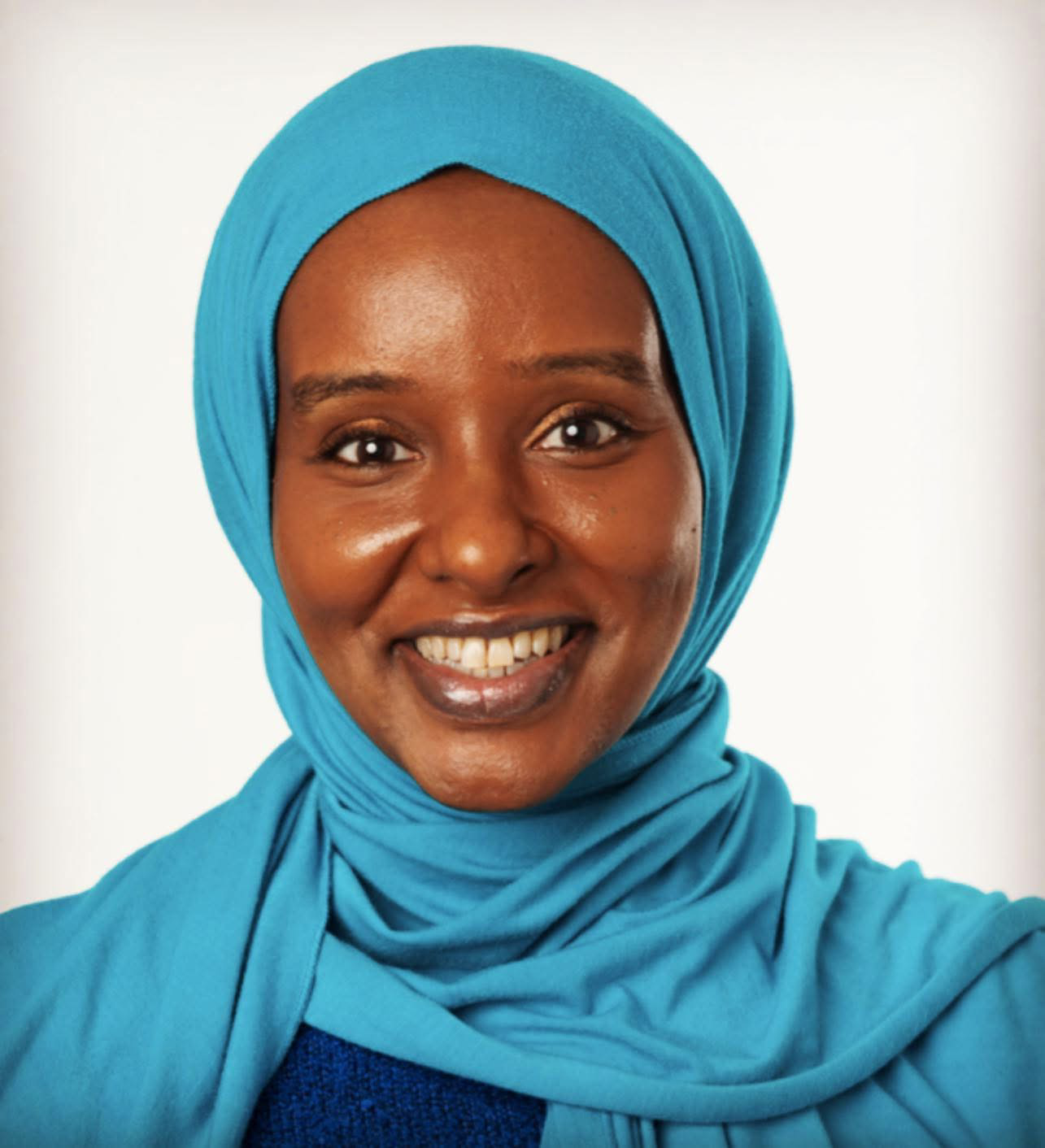
My Hijab Journey
Contributed by Yerusalem Work
Like so many people, I seek to please God (Allah). In Arabic, the name Allah is held highest. It has no gender or plural form. When becoming Muslim, reverts study Arabic, which often inspires and enlightens, humbles and challenges. It is incumbent upon Muslims to learn Arabic well enough to pray or make salat, which is formal worship. The journey to Islam is paved with wisdom and guidance. Allah guides and makes the Straight Path known to believers.
For so long in the interfaith community, I have tried on different head coverings (some say, hats) as an adherent of a faith or in solidarity with a people. Muslim women are taught to wear a veil as an expression of faith and modesty through a Quranic injunction (Surah An-Nur (24:31) & Surah Al-Ahzab (33:59)) that describes a Muslim woman’s responsibility to embrace hijab. Christian women are obligated to wear headscarves when praying or prophesying according to Paul, the author of the First Epistle to the Corinthians in the New Testament. Orthodox Jewish women often wear head coverings once married. There is value in wearing a head scarf whether modesty or subservience.
Muslim men and Jewish men have an opportunity to wear head coverings (a kufi or taqiyah for Muslim men) (a kippah for Jewish men). Outside Islam, Christianity, and Judaism, head coverings are implemented to reflect spirituality, for example, in the Sikh traditions.
As we near February 1, 2026, World Hijab Day, it is important we exercise our sacred right to express our faith and our right to choose how we present ourselves in public or private. In the United States, there is no ban on the hijab per se, but a significant percentage of employers discriminate against women who wear hijab, though it is against the law to act on such prejudice. On one end of the spectrum, some people oppose Islamic practices, altogether. This level of hatred and bigotry may even extend to other marginalized groups of religious congregants, however diverse. On the other end of the spectrum, there are people who flourish in their distinctive, cultural, and religious traditions.
It is our right to wear hijab. Here in this brief video, we hear “The Miranda Rights for Hijabis” This is an excerpt from my poetry collection, “Watery Eyes: Reflections of a Muslim Woman” It combines humor, purpose, and power.
According to U.S. law, citizens when arrested have the constitutional right to remain silent and the right to an attorney. For so many of us, our hijabs speak for us and we have no one but Allah (swt) to protect us. So, I devised this version of the Miranda Rights for Hijabis (women who wear hijab).
You have the right to wear hijab. Anything you say or do will be used to prove your Islam. You have the right to stand before Allah on the Day of Judgment. If you cannot afford a copy of the Quran, one will be provided for you. Do you understand the final revelation of Allah (SWT) given to the Prophet Muhammad, (SAWS), is a mercy for all mankind? With your faith on the line, do you realize the entire earth is a masjid, a place for prayer and purification? Will you pray as Muhammad, (SAWS), prayed?
#UnityInHijab
Your hijab may be a form of dawah (an invitation). You may invite others to Islam through sparking a conversation about faith or developing a friendship as a result of authentic expression.
On World Hijab Day, February 1st, women all over the world can celebrate the opportunity to wear a veil whether for the purpose of modesty or inclusion, solidarity or spiritual union. Hijab is not a sign of oppression; it is the evidence of a powerful form of self-expression whether the collective self or individual self. It gives us freedom from distraction in everyday conversation. It centers our day around Allah (swt), making it easier to submit our prayers.
Wearing hijab, a head covering, leads to a paradox. It makes us standout, not just for who we are, but what we believe. It makes us a representative of the One Who is unseen. This combination of visibility and invisibility empowers women who are meaning-driven. We find purpose in wearing hijab—if for no other reason than to please Allah (swt).
SWT in Arabic stands for “Subhanahu wa ta’ala” (سبحانه وتعالى), meaning “Glory be to Him, the Exalted,” or “Glorified and Exalted is He,” a phrase used by Muslims to show reverence and praise when mentioning Allah (God).
SAWS In Arabic, “SAWS” is an abbreviation for “Sallallahu Alayhi Wa Sallam” (صَلَّى اللّٰهُ عَلَيْهِ وَسَلَّمَ), meaning “Peace and blessings of Allah be upon him,” a phrase used by Muslims out of reverence and respect after mentioning the name of the Prophet Muhammad.
Yerusalem Work, a creative writer with a heart for interfaith dialogue, is an educator, passionate about community building. A holder of a master’s degree in library science and a prolific author, she regularly blogs and self-publishes her writing. Her writing has been published in Muslim Matters, Islamic Horizons, and Tysons Interfaith. She considers it an honor and a pleasure to write on Islamic themes.
This blog post is the expressed opinion of its writer and does not necessarily reflect the views of Tysons Interfaith or its members.

Copyright 2022 © TYSONS INTERFAITH. All rights reserved.