


Over 40 years ago the United National General Assembly established the International Day of Peace. In 2001 they unanimously clarified the day as being dedicated to strengthening the ideals of peace among all nations and peoples of the earth. This year’s Day of Peace theme is End Racism. Build Peace.
It is a common practice in the US is to declare days in recognition of this or that. For years I have found that confusing when it comes to something like peace. The declaration of twenty-four hours dedicated to something such as cease-fire and non-violence, begs the question: Is it then okay to be horrid and hateful during the other 8,736 hours in a year? I know we must start somewhere, and one day is better than no days. I feel we need to be clear about our intention: we want more! We are called to do everything within our power to bring about its fulfillment. We need to be firm and not accept anything less than its fulfillment lest we give in and tolerate something less than real peace. We must be willing to go full out for all peoples – all creation – to experience the components of peace.
This year, the United Nations is acknowledging that achieving true peace entails much more than laying down arms. It requires the building of societies where all members regardless of race can flourish.
It has long been a stand within Centers for Spiritual Living that we are called to create a world that works for all. This involves creating a world in which there is equity, in which all people are treated equally, regardless of their race, gender, orientation, age, ability or other unique attributes. We envision all people, all beings, and all life as expressions of God.
Our Global Vision doesn’t just suggest that we should be nice to one another. It clearly states that we envision “A World That Works for Everyone”- a world of peace and harmony, enfranchisement and justice – and that this is our work to do. It doesn’t suggest that mediocre is okay. It calls us to commit to it and lean into its fulfillment!
As Secretary-General António Guterres has said: “Racism continues to poison institutions, social structures, and everyday life in every society. It continues to be a driver of persistent inequality. And it continues to deny people their fundamental human rights. It destabilizes societies, undermines democracies, erodes the legitimacy of governments …” In the presence of such forces, collective peace is not experienced.
We each have a role to play in fostering peace. Tackling racism and other demonstrations of prejudice are crucial and require our collective action.
In furtherance of the United Nations dedication to strengthening the ideals of peace, both within and among all nations and peoples, the Secretary went on to say, “We are called to dismantle the structures that entrench racism in our midst. We can support movements for equality and human rights everywhere. We can speak out against hate speech – both offline and online. We can promote anti-racism through education and reparatory justice.”
Stay tuned as we explore local efforts to promote anti-racism and sustainable peace in our homes and communities.
This blog post is the expressed opinion of its writer and does not necessarily reflect the views of Tysons Interfaith or its members.
Peace is more than freedom from disturbance or the absence of war. It is a commitment to assuring the well-being of all.
Peace is more than a state of tranquility. Tranquility is a feeling – a sense of calm and quiet that is by its nature transient, ephemeral. It may be experienced in meditation or sitting under a starry sky, listening to the crickets. The aura of tranquility is often associated with a calm environment, a temporary (perhaps fleeting) sense that you don’t have a care in the world.
Though the critical components of peace do include affects such as the absence of war and freedom from disturbances, they are so much more. They include mutual respect, shared values, a commitment to put peace ahead of prejudice and rivalries. True peace will only arise when these components are recognized and the underlying obstacles to peace are addressed and resolved.
Sustainable peace is not passive. It is the work of a lifetime – the conscious commitment to assure that the components of peace are conscientiously strengthened and preserved. Fears and insecurities can cause otherwise stable individuals to waiver. Even a well-developed sense of self can be challenged by the numerous forms of inequity that are presently evident. Those inequities must be eliminated. Diligent reassurances of progress are critical to establishing lasting peace.
For peace to be sustainable it must be based on mutual respect – the recognition of the divinity of all creation demonstrated in all relationships. It goes beyond surface level interactions to supporting one another in developing human dignity – soul-level self-respect rather than ego-based pride. Such dignity is the right of every person to be valued and respected for their own sake, to be treated ethically and to experience equity in all areas of life. This is an inherent, inalienable right. This is a keystone component of enduring peace.
Open communication is essential so that common ground and shared values can be identified and used as the foundation on which to build trust. Fully embracing “oneness,” and accepting the responsibilities that come with that embrace, make sustainable peace possible.
Stay tuned for coming blog posts as we explore the United Nations International Day of Peace and actions local faith communities are taking to empower people to build sustainable peace in their homes and communities.
This blog post is the expressed opinion of its writer and does not necessarily reflect the views of Tysons Interfaith or its members.
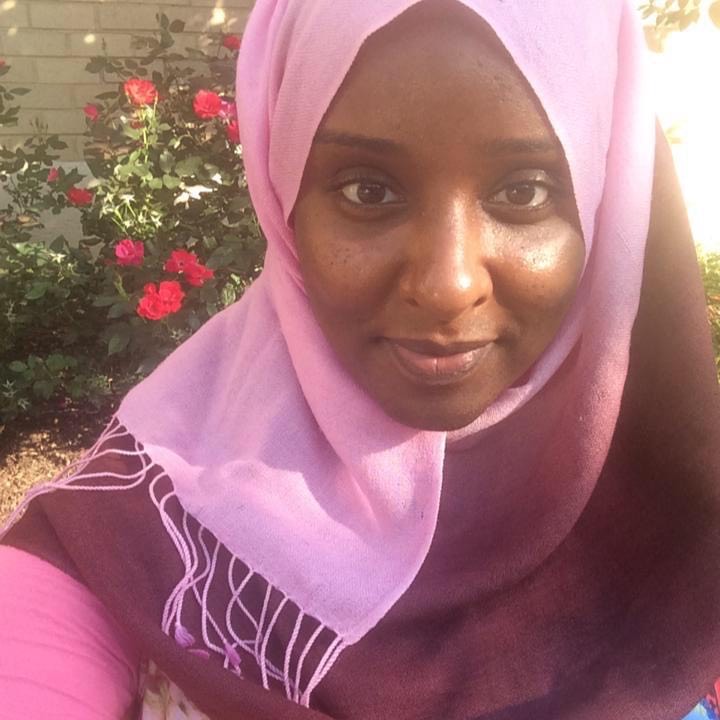
Before I accepted Islam, I worked at a bank. A fellow teller disturbed me with his vehement views about Islam. He made a mistake during a transaction, but he was angry at his customer. He charged into my workspace, explained to me his error and growled, “I hope she’s Muslim.” I asked, “Why?” Then he, a non-Muslim, erroneously asserted, “There is no forgiveness in Islam.”
My heart sank. His heart, a lump of coal, ignited by ire blazed due to his inner turmoil. “Have you read the Qur’an?” I wondered. Allah is Most-Forgiving, Most-Merciful.
Accepting Islam involved letting go of misconceptions. The truth is my former co-worker feared the repercussions of his actions. Then he mercilessly unleashed his cruelty upon an innocent woman. He was an enemy of Islam.
The world is not so neatly divided into friends and enemies. Everyone harbors prejudice. As I embraced Islam, I began to wear hijab at the bank. Who knows what my former co-worker thought of me?
The journey into Islam is beautiful. I renew my vows from time to time as if a marriage. More than ever, I feel forgiven. What was so elusive to me before is palpable in this faith.
“Say, (O Muhammad, to mankind): If ye love Allah, follow me; Allah will love you and forgive you your sins. Allah is Forgiving, Merciful” (Qur’an 3:31).
It is believed when you take your Shahadah and enter into Islam, all your past sins are forgiven and you begin with a clean slate. Muslims repeat their Shahadah during prayer multiple times a day.
“That Allah may forgive you your sins of the past and the future, and complete His Favour on you, and guide you on the Straight Path…” (Qur’an 48:2)
Reading the Qur’an brings peace if that is what you’re searching for. Forgiveness comes in waves. Don’t go against the current. Rest on the shores of mercy.
My former co-worker was not punished for his mistake. He was recognized as a human in need of forgiveness. I wish he would extend the same courtesy to others, but truly he was not wronged. He himself erred. The lesson is that sometimes the most difficult person to forgive is yourself.
Have you ever said, “I’ll never forgive myself, if…”? Don’t fall into that trap! Forgive yourself. Be compassionate. Once you forgive yourself and stop blaming others, a world of positive emotions open up. Fill your heart with awe and love, hope and gratitude. You are who you are and that alone is a blessing. Believe that you can handle whatever comes your way with a little guidance and a lot of faith.
This blog post is the expressed opinion of its writer and does not necessarily reflect the views of Tysons Interfaith or its members
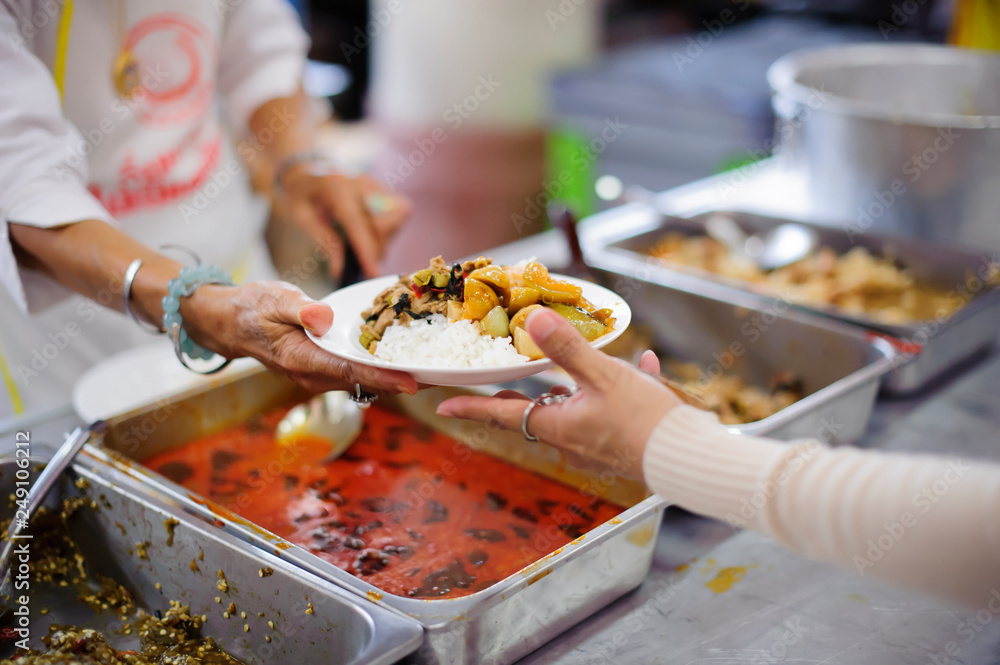
According to an article from the Stanford Center for Longevity, there is a relationship between volunteering and improved physical health and cognitive function. “Research also shows that volunteers report elevated mood and less depression, and that volunteers report increased social interactions and social support, better relationship quality, and decreased loneliness.” longevity.stanford.edu/three-reasons-why-people-dont-volunteer-and-what-can-be-done-about-it/ A recent contributor to Deseret News had this to say about her volunteer experience: “I’ve experienced the boost in happiness, the sense that I was part of something bigger. I made friends, formed connections that I still have to this day, and I felt more optimistic about the world when I was surrounded by people who, like me, were trying to help others.” www.deseret.com/coronavirus/2022/4/17/23024241/will-the-volunteers-come-back-nonprofit-volunteering-covid-pandemic.
Of course, volunteerism strengthens communities as well. As people of different backgrounds come together to serve our neighbors, we discover that we have much more in common than we ever imagined. Getting to know our neighbors and working together to lend a hand is an antidote to the violence, divisiveness, and acrimony we are reading in today’s headlines. Whether it is one-on-one mentoring, serving meals, doing laundry at a homeless shelter, cleaning up a local park or working at an animal shelter, or many other opportunities, each selfless act truly does help make the world a better place.
While all of this is good news, non-profits are struggling to find volunteers to meet their needs. A Gallup survey published in January 2022 concluded that, “monetary charitable donations are mostly back to their pre-pandemic levels, while volunteerism still lags.” news.gallup.com/poll/388574/charitable-donations-rebound-volunteering-down.aspx
This is being borne out by the experience of some of our local area non-profits. One example is The Lamb Center in Fairfax which provides daytime drop-in services to people experiencing homelessness. Tara Ruszkowski, Executive Director, reports that one of the Center’s biggest challenges right now is finding enough volunteers to meet their needs. “The Lamb Center has seen a marked increase in daily visits from our homeless neighbors. We are back to pre-COVID levels, serving over 100 people a day! As the number of individuals who come for services rises, our need for support increases. Now is a great time to join our efforts! We are currently seeking volunteers for our kitchen, front desk, and clothing closet. Please email barbdelisa@thelambcenter.org if you are interested in joining our volunteer team!”
So …. ready to move on, roll up your sleeves and make a difference? Check in with your local house of worship, or check out opportunities on the Tysons Interfaith Resources Page: (Be sure to take a look at the list of amazing local non-profits in our area.) tysonsinterfaith.org/resources/
This blog post is the expressed opinion of its writer and does not necessarily reflect the views of Tysons Interfaith or its members.
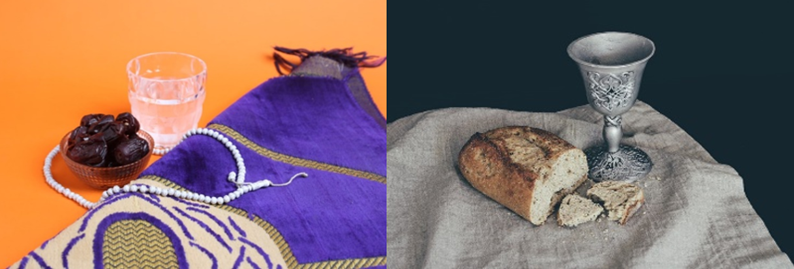
The following log is being presented in a series of weekly installments. To read this document in its entirety, please visit: philchurch.substack.com
DAYS 29/30 (FRIDAY/SATURDAY, APRIL 29/30) – Attending an Afghan Hiring (Job) Fair. NF comes to town from where he’s living with his family in Pittsburgh to meet up with his former work colleagues, HM and JN, whom he hasn’t seen since the summer 2021 when the three worked together on US government funded projects in Afghanistan. NF has come to attend a Northern Virginia Afghan Hiring Fair, sponsored by local non-profits and attended by some corporate recruiters. The three Afghans are hopeful that this event, or others to come, or what may emerge on their computer screens each day, will open doors to productive jobs and self-reliant futures. Some leads emerge from the job fair, but more follow-up work to do with online applications lies ahead.
DAY 31 (SUNDAY MAY 1) – Eid Mubarak! Happy Eid! Ramadan concludes at sunset. Today, HM joins the families of some of his friends for special prayers followed by a celebratory Eid dinner. Phil and Connie wonder how his life and ours will readjust to returning to regular eating and sleeping hours. We wonder what the future holds for him and for us in his life. Our month together has been richly rewarding and a real learning experience for each of us.
Ramadan ends but the Easter season continues until Pentecost the fiftieth day after Easter Sunday. Our interfaith lives together with HM continue as well. Connie and Phil feel blessed to have HM in our home and to be able to support him as he faces the challenges of strengthening his foothold in our American economy and culture.
HM has a lot more to accomplish before he becomes self-reliant and, most important, before he can thrive enough to send money back to Kabul to help his family members whose lives become more precarious each day. We don’t know how long it will take and what challenges still lie ahead for HM here and his family there. But HM’s self-confidence is contagious and has infected us deeply. Our respective faiths and shared values are bonding us closely together.
So, wish us well and stand by! More good news is surely to come.
This blog post is the expressed opinion of its writer and does not necessarily reflect the views of Tysons Interfaith or its members.
An AP story that ran recently in the Washington Post touched us deeply.
We shared the story with our Tysons Interfaith colleagues who also found the story to be very uplifting. We share it again here for all to appreciate:
WASHINGTON POST, June 27, 2022
www.washingtonpost.com/kidspost/2022/06/25/
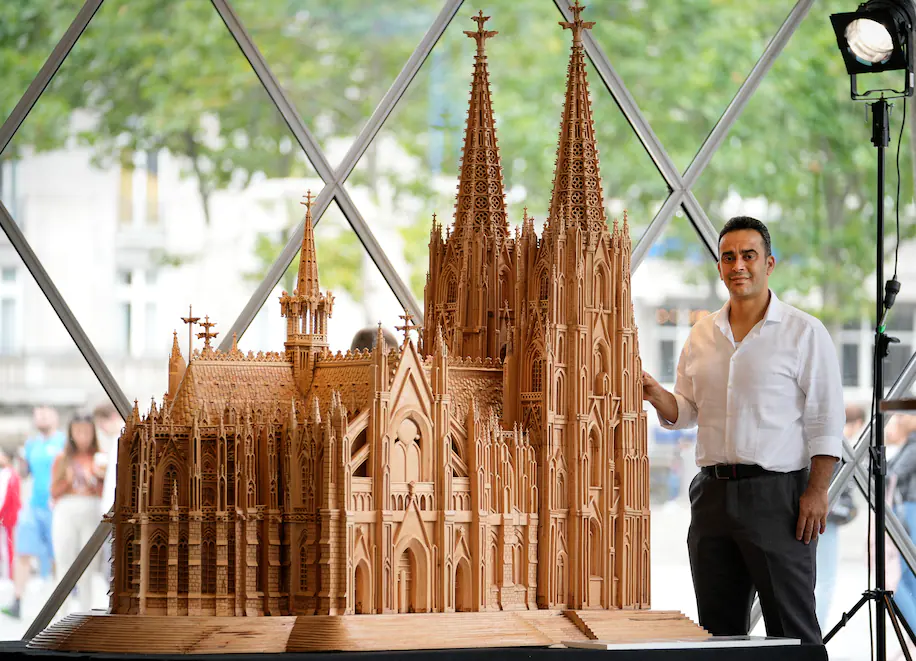
Syrian refugee spends 5,000 hours carving model of German cathedral
Fadel Alkhudr, a woodcarver who fled war in Syria, was charmed by the cathedral in Cologne, his new home.
Fadel Alkhudr from Syria poses Monday with his wooden model of the Cologne Cathedral on display in Cologne, Germany. Alkhudr, a woodcarver from Aleppo, Syria, fled the war in his home country and arrived in Cologne in 2015. He became fascinated by the cathedral and decided to carve a model. (Martin Meissner/AP) Fadel Alkhudr from Syria poses Monday with his wooden model of the Cologne Cathedral on display in Cologne, Germany. Alkhudr, a woodcarver from Aleppo, Syria, fled the war in his home country and arrived in Cologne in 2015. He became fascinated by the cathedral and decided to carve a model. (Martin Meissner/AP)
When Syrian refugee Fadel Alkhudr arrived in Germany in 2015, the first thing he saw when he stepped out of the train in Cologne was the city’s majestic cathedral.
Alkhudr, 42, became so fascinated by the famous landmark on the Rhine River with its twin spires and elaborate ornaments that he spent hours looking at it. He took photos of it, drew sketches and eventually started carving a wooden model.
For more than 2½ years — or about 5,000 hours, he says — Alkhudr worked on creating a 6½-foot-tall copy of the structure in a small basement that he uses as a workshop in the city.
Alkhudr, who is Muslim, said he developed such a close connection to the Catholic cathedral that at some point it felt like the building became a part of him, “like it’s a dear friend to me.”
The Syrian, who learned carving from his father at the age of 13, first fled to Turkey and then to the western German city of Cologne after his family’s woodcarving business in Aleppo was destroyed during the war in Syria. He said he’s often asked if it didn’t feel strange for a Muslim to dedicate himself to Germany’s most famous Christian house of worship.
Not at all, he says, because growing up in Aleppo before the civil war, he had Muslim and Christian friends, and customers from different religions who came to buy wooden art at the family store.
“When we were in Aleppo we used to have … no issues between a mosque and a church,” the father of five recounts. “Our neighbors were Christian and we are Muslims. We used to invite each other into our homes and there were no problems.”
Alkhudr is one of more than 1 million migrants who came to Germany from Syria, Iraq and Afghanistan in 2015-2016, escaping war, destruction and poverty in their home countries. He first worked odd jobs to make a living, brought his family over in 2017, and, since 2019, focused on creating the cathedral model. He hopes that in the future he can also make a living in Germany as an art carver.
Alkhudr used hard beech wood and 50-year-old tools from Syria that his father had passed on to him. The end result was 6½ feet in height and length, and about 4½ feet in width.
The original cathedral is 500 feet tall and took more than 600 years — from 1248 to 1880 — to complete. It’s a United Nations World Heritage Site and hosts the Shrine of the Three Kings, believed to contain the bones of the “Three Wise Men.” The cathedral is one of Germany’s top tourist attractions and one of the oldest and most important pilgrimage sites of Northern Europe.
Alkhudr’s delicately chiseled work is on exhibit at the cathedral’s Domforum visitor center just across from the original. The Syrian hopes that he can present his woodwork in other cities, too, and thus spread what he sees as the cathedral’s unifying message.
“For me, the cathedral is a home for all people,” he said.
This blog post is the expressed opinion of its writers and does not necessarily reflect the views of Tysons Interfaith or its members.
The following log is being presented in a series of weekly installments. To read this document in its entirety, please visit philchurch.substack.com
DAY 22 (FRIDAY, APRIL 22) – THE DMV experience. Qualifying for employment in the US requires Afghan refugees to have a government-issued picture ID. It is not enough to have a special immigrant visa (SIV) but also to have ID issued by the state of residence. So Catholic Charities arranges Uber transportation for HM to visit the local DMV, get photographed and take the written test for a learner’s permit. (He has actually been driving for several years in Kabul, but none of that counts toward getting a Virginia State Driver’s License.) Phil obtains a copy of the Virginia Drivers Manual which HM studies for the test. However, after he arrives at the DMV and waits in line, he is told he must show proof of Virginia residency in the form of a rental agreement, utility bills, bank account with a residence street address on it. He does not have those at the moment.
Back home, HM, Phil and Connie, download print out, fill in, and together sign a month-to-month lease agreement for ‘renting’ a room and bath in our home complete with ‘kitchen privileges.’ We laugh at that kitchen privileges clause because HM is now Connie’s companion cook, stocking our refrigerator and shelves with Iftar meals and food from Costco and the Halal supermarket.
Finally, the rental agreement, along with a bank statement – also now with our home as his mailing street address – make HM eligible to take the DMV written test. He “aces” the exam getting 40 out of 40 questions correct. A week later his learner’s permit arrives in our mailbox. HM proudly shows us the card with his head-and-shoulders photo on it; he’s one step closer to having what he needs to show he’s a worthy job applicant.
DAYS 23 (SATURDAY, APRIL 23) – Venturing into the District on Metro. Today, HM is meeting an American living in D.C. who was his work colleague and project on a US government contract in Kabul. HM wants to learn how to use the Metro Card that Catholic Charities has given him to help in getting to job interviews and for other needs. Phil drops HM at the West Falls Church Metro. HM is back home five hours later after having walked-and-talked much of the Capitol Mall with his former American colleague, then finding his way home from our closest Metro stop using his smart phone’s GPS. HM now considers himself Metro proficient. We tell him that it’s been more than two years, pre-Covid since we have ridden the Metro.
DAY 24 (SUNDAY, APRIL 24) – The same wine in different bottles? It was inevitable that Phil’s and Connie’s periodic comparative religion conversations with HM would drift into the realm of money and provisions in Islamic sharia law that prohibit usury, including charging interest rates to borrowers, or paying interest rates to lenders. An Islamic bank or financial institution, HM explains, becomes the purchaser and charges a markup for doing so under a system called murabaha. Say, a buyer wants to purchase a car for $20,000 and doesn’t have enough cash to pay the full cost. An Islamic bank purchases the car for the buyer who will repay the buyer-bank in, say, 10 monthly installments of $2,200.00 or a total of $22,000.00. At that time, the final buyer takes the title to the car. The Islamic institution keeps the $2,000 additional payment over what it paid for the car to cover its “costs of doing business.” We would see that as 10% interest payment, but, shhhh! That’s not the way sharia-observing Islamic bankers view it. Phil and Connie need to follow up on this conversation with HM some future evening with a discussion focusing next time on saving and investing in the Islamic world.
DAY 25 (MONDAY, APRIL 25) – Job search coaching is now priority #1. This morning HM is up early for his appointment at the Alexandria office of Work Force Development where he will meet with a job counselor about his work status, resume, job prospects, and possibly some tuition-free English language training. Catholic Charities arranged the appointment and for Uber transportation to the appointment and back. Phil and Connie are impressed both to learn that such a Workforce Development office exists and is available to Afghan refugees and that settlement agencies have resources to arrange transport for visits to meet with professional job counselors. In HM’s case the system appears to be working well.
DAY 26 (TUESDAY, APRIL 26) – Becoming his own boss? HM continues to explore the option of marketing his computer consulting services through an online business of his own, while he continues his job search. He reports that several of his Afghan friends are looking at this option as well because they all are having problems landing jobs in their fields. Residency histories and US government-issued security clearances are among the obstacles for specialists in computer systems and cyber security work for which HM is well qualified. HM meets neither of those residency or security requirements still being such a recent arrival in the US. HM asks us where the nearest book-store is, one that sells titles on small business start-ups. Phil says he’s happy to take HM to the local Barnes and Noble, but suggests first that he should go online and look over the rich reservoir of free resources that the US Small Business Administration (SBA) has to offer for aspiring small business owners. More late-night research for HM to conduct during Ramadan.
DAY 27 (WEDNESDAY, APRIL 27) – – Rich Dad, Poor Dad. This evening at dinner we discuss finances. The topic comes up because HM shows us a list of books that he wants to buy to understand better how to start a business. On the list is author Robert Kiyosaki’s book, Rich Dad, Poor Dad. We tell him not to buy that book because we have one of the 35 million copies of this best-seller in our home library. Phil gets it off the shelf and hands it to HM to read.
Later, we also discuss saving and investing and the importance of having your money work for you as well as you working for your money. HM is a bit vague about stock and bond investing according to Islamic sharia law. Phil reminds him that Islam does not prohibit investing in company stocks but does avoid positions in some business sectors. He encourages HM to look at the Islamic approved Iman Fund – [symbol Imanx] www.imanfund.com – which only has holdings in sharia-compliant firms. Excluded, for example, all banking institutions and firms that produce alcohol, tobacco, hallucinating drugs or pork products and are in the gambling and adult entertainment sectors.
Phil also shares that some faith communities – Presbyterians, Catholics, Jewish – have developed similar socially responsible funds that align their investments with their particular values. He tells HM that our Presbyterian denomination has funds that are similar to the Iman Fund but unlike in that those funds include financial institutions. In short, our Christian and Islamic faiths overlap in our investment practices in most if not all cases.
DAY 28 (THURSDAY, APRIL 28) – Give him credit for asking. Phil, Connie and HM are having periodic discussions about money and this evening’s topic is credit cards. Should he have one and what impact does it have on his credit history? HM is wondering. HM indicates he understands it is important to build a good credit history to qualify for a loan to buy a car or maybe someday a small condo or house. Right now, he only has a debit card attached to his bank account. We explain that for some purchases, particularly those made online, a credit card is advisable because he has a better chance of getting his money back should he want to return his purchase or if he gets caught up in some fraudulent transaction. He was not aware. We encourage HM to shop for the best rate and terms as credit cards, unlike debit cards, often come with annual fees. Also, we caution him, it is important to pay off his credit balance and not get enmeshed in credit card debt, against Islamic usury prohibitions. For a Muslim that’s a double incentive to be a pay-go consumer. HM appears to understand that well.
This blog post is the expressed opinion of its writer and does not necessarily reflect the views of Tysons Interfaith or its members.
The following log is being presented in a series of weekly installments. To read this document in its entirety, please visit philchurch.substack.com
DAY 15 (FRIDAY, APRIL 15) – Good Friday and Good Food. One of HM’s friends – we’ve now lost record of all their names – comes by to take him shopping and then to dinner. HM returns later that evening laden down with more halal groceries and foods prepared by his friends. Not only is our freezer and fridge full, but we now have a mounting collection of plastic food containers as we go through some of the left-overs and special dishes that HM brings in. We’re not sure to which of HM’s friends to return which food containers. Beyond some banana bread Connie bakes for JN and his family it’s a challenge reciprocate the continuous flow of delicious Afghan dishes into our house.
DAY 16 (SATURDAY, APRIL 16) – Gardening Together. HM has been pressing Phil to let him help around the house. It’s not sufficient for him to just cook and wash dishes, he tells us. So, Phil takes him out into the backyard today to spread mulch from the mountain of 3-cubic-foot bags that the local Boy Scout troop delivered in mid-March. HM is a huge help at carrying, opening and dumping the heavy bags while Phil follows along behind with a garden rake spreading out their contents under the shrubs and around the perennials. Together they get the job done in half the time that it normally takes Phil to do it alone. And that’s with HM fasting. Still Phil and Connie agree that’s enough outdoor exercise for HM for the day.
DAY 17 (SUNDAY, APRIL 17) – Attending Easter Services. HM had earlier expressed an interest in observing our Sunday church services so we take him to our Easter Sunday service. He has to rise much earlier than normal with a long day of fasting ahead of him, but he is awake and ready when we leave the house. Phil and HM sit toward the back of the church while Connie is up front ringing bells. HM observes the service and follows along in the Sunday program. There is only slightly awkward moment during the period of congregational greeting when we all stand for sharing of the peace with those around us. During Ramadan many of the devout abstain from sexual intimacy, even any male/female contact, so when some of our female congregants offer a hand shake, HM instead raises his hand to his heart. Whether folks feel he is doing that because of Ramadan or Covid, Phil does not know. But folks seem to understand.
DAY 18 (MONDAY, APRIL 18) – Trivia Question: In how many places in its written text does the Quran make reference to the Christian Bible? At Iftar dinner this evening, HM, Connie and Phil get into a comparative religion discussion. HM points out that Ramadan is not only a period of fasting but also of sharing. Breaking fast at the end of the day involves sharing of food with the least fortunate as well as with close friends. He asks if we have the same custom at Easter. We explain that our Christmas season focuses more on giving and sharing than Easter, when we celebrate the triumph of good over evil, of eternal life over death.
HM reflects on this and then points to a passage in his copy of the Quran, which makes reference to eternal life. He reads from the English version of the Quran, which we are surprised to hear starts out as: “O People of the Scripture! You have no basis until you uphold the Torah, and the Gospel, and what is revealed to you from your Lord.” [Quran, 5:68]. We express our surprise at the Quran’s reference to the Torah – essentially parts of our Old Testament Bible – and the Gospel – our New Testament Bible. We ask if there are other references to the Gospel in the Quran. “Oh yes,” HM says. “Several.” There is, of course, a Quran chapter, “Mariah” dedicated to Jesus, a major profit in Islam, and his mother, Mary. But more? Together we check how many times the “Gospel” is referenced in the Quran. Not wanting to read the entire Quran we take a high-tech short-cut and go to the website www.clearquran.com to find a full-text English version of the Quran and do a key-word search. “Gospel” comes up 12 times; “Torah” (16 times). We never would have thought …
DAY 19 (TUESDAY, APRIL 19) – What am I in America? HM continues filling out online job applications. One of the questions he is not sure how to answer is about race and ethnicity. The choices offered most job applicants are: White/Caucasian; Black/African American; Hispanic; Asian; and Native American/Pacific Islander. In only a few cases did applications provide ‘Other’ and none provide a “Middle Eastern” among the options. HM indicates he is confused about both the why and the what of the question. As to ‘why’ Phil explains that increasingly American businesses are working to increase the racial and ethnic diversity of their work forces.
The ‘what’ is a bit more challenging. HM explains that Afghans do not consider themselves “Asian,” a racial and ethnic background they view as related to those from the Far East and from South East Asia – e.g., Chinese, Japanese, Indian, Indonesian, etc. Phil tells HM he’s challenged on how to guide him on responding on those job applications; best to indicate the race or ethnicity to which HM personally feels he relates most closely. HM has consulted his Afghan friends and they all agree that they would respond “White.” Phil’s response: Go with it!
DAY 20 (WEDNESDAY, APRIL 20) – Iftar dinner out. Phil has driven many times down Leesburg pike to Bailey’s Crossroads and into Alexandria without realizing that just a few blocks from seven corners is an Islamic Mosque off to the left. Dar Al Hijrah mosque is located in a residential area across from two other houses of worship, a First Christian Church and Church of Christ. In a very ecumenical spirit motivated by pragmatic considerations the two churches offer their parking lots for those attending evening prayers, particularly nightly during Ramadan.
Phil, Connie and HM are driving to the mosque this evening. We are guests of the mosque for an Iftar dinner at which representatives of other local non-Muslim houses of worship have also been invited. We sit at long tables apart from the rest of the several hundred participants in Iftar dinner following evening prayers. During Iftar dinner, we have a presentation of Islam by two of the Dar Al Hijrah imams (Islamic teachers), and a lively discussion ensues covering topics that include the role and treatment of women, differences between cultural and Quranic practices, and the Islamic calendar with its requisite daily rituals. We feel honored to have been invited along with HM; while he participates in prayers, we observe with women out of sight on one side and men on the other. Then we share the evening Iftar meal together.
DAY 21 (THURSDAY, APRIL 21) – In-house resident computer geek to the rescue. After dinner, Phil mentions that he’s somehow lost wireless communications between his laptop computer and our home printer and can’t get them to ‘recognize each other despite rebooting and all the other trouble-shooting steps he has followed earlier. HM asks if he can try and in less than 30 minutes has the problem solved.
Phil asks HM if he could help ‘decommission’ two older but still internet-ready laptops that he and Connie used in the past so that they could be donated to a family with kids needing a computer for school work. Of course, says HM, and the next day he wipes them clean of all personal files. Phil wonders if there are others out there who could benefit from HM’s computer decommissioning talents and other IT skills. HM indicates he has considered starting a computer support business providing system management and cybersecurity services. It’s certainly great to have an in-house computer geek, in addition to a guest with gourmet cooking and gardening talents!
This blog post is the expressed opinion of its writer and does not necessarily reflect the views of Tysons Interfaith or its members
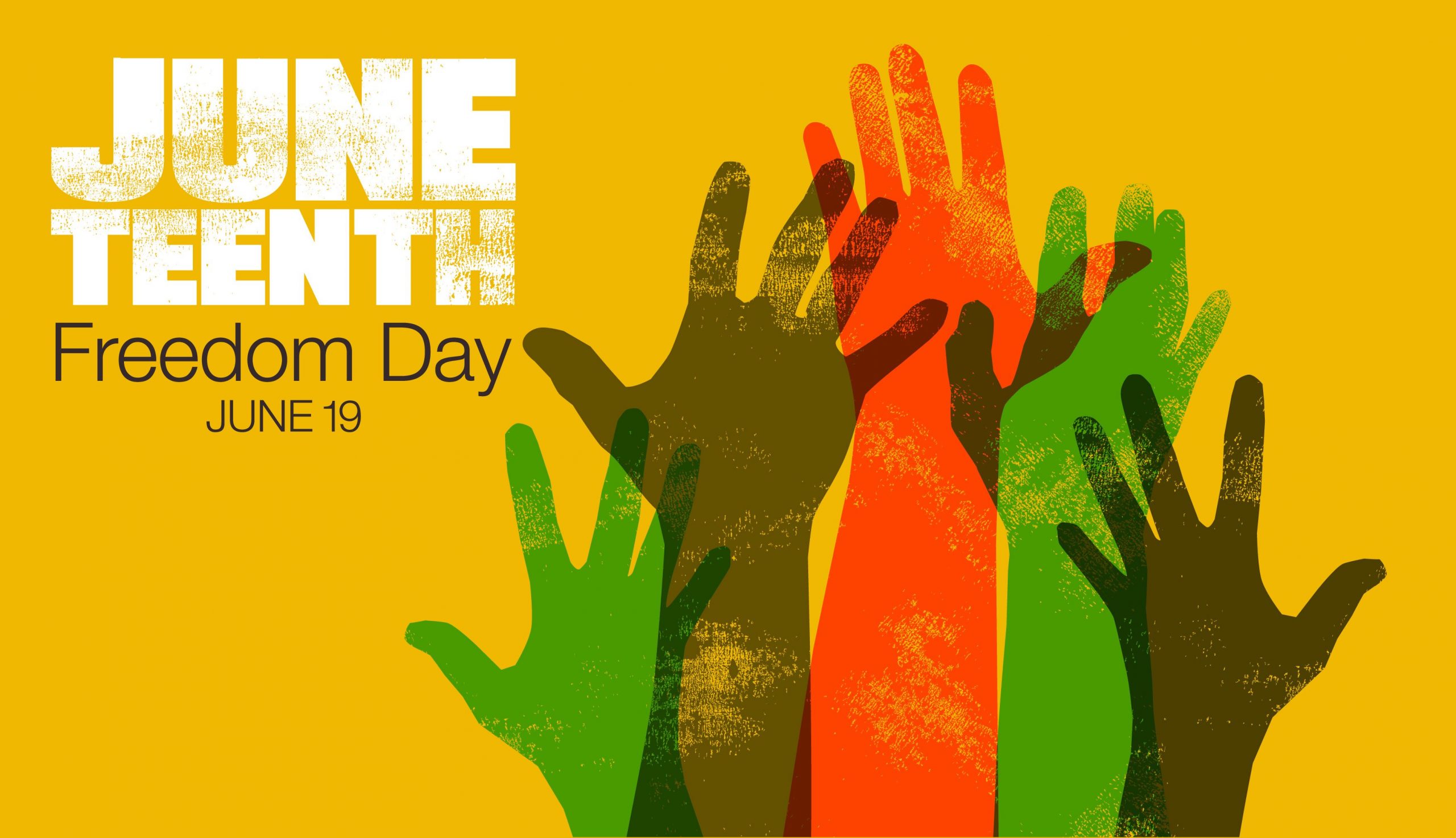
This is only the second year for the Federal holiday of Juneteenth. What is it about, anyway? Why is it important?
The history of Juneteenth is this:
“After the Union Army captured New Orleans in 1862, slave owners in Confederate states migrated to Texas with more than 150,000 enslaved Black persons. For 3 years, even after President Abraham Lincoln issued the Emancipation Proclamation, enslaved Black Americans in Texas remained in brutal bondage, immorally and illegally deprived of their freedom and basic dignity. On June 19, 1865 — over 2 years after President Lincoln declared all enslaved persons free — Major General Gordon Granger and Union Army troops “marched to Galveston, Texas, to enforce the Emancipation Proclamation and free the last enslaved Black Americans in Texas.” Presidential Proclamation on Juneteenth Day of Observance, 2022
On this gorgeous Sunday in June in Virginia in 2022, I was so glad that I attended worship at my church, Redeemer Lutheran in McLean, where Bible readings, uplifting music and the pastor’s message fleshed out for me Juneteenth and why, from the Christian perspective, it should be important to us.
At church today, I heard this reading from the book of Galatians, Chapter 3: “There is no longer Jew or Greek, there is no longer slave or free, there is no longer male and female; for all of you are one in Christ Jesus. And if you belong to Christ, then you are Abraham’s offspring, heirs according to the promise.”
Pastor Sandy Kessinger began her sermon with a quote from Maya Angelou: “History, despite its wrenching pain, cannot be unlived; but if faced with courage, need not be lived again.” She spoke about the unfinished work we, as Christians, are called to undertake to live out Gospel truths and dismantle destructive “isms” in our society. (To read Pastor Kessinger’s message, please visit: https://redeemermclean.org/worship/sermons)
And as we finished the service, the assisting minister read this prayer:
“Go out into the world in peace; have courage; hold onto what is good; return no one evil for evil; strengthen the faint hearted; support the weak, and help the suffering; honor all people; love and serve the Lord, rejoicing in the power of the Holy Spirit.”
(To view a recording of this service, please visit: https://vimeo.com/showcase/7193046)
While it is a new holiday to many of us, I now have a deeper appreciation of what Juneteenth means, and what it should inspire. This new national holiday challenges us to face our history honestly, and to work for a better future for EVERYONE. As the Presidential Proclamation for Juneteenth 2022 reads:
“Juneteenth is a day to reflect on both bondage and freedom — a day of both pain and purpose. It is, in equal measure, a remembrance of both the long, hard night of slavery and subjugation, as well as a celebration of the promise of a brighter morning to come. On Juneteenth, we remember our extraordinary capacity to heal, to hope, and to emerge from our worst moments as a stronger, freer, and more just Nation.”
This blog post is the expressed opinion of its writer and does not necessarily reflect the views of Tysons Interfaith or its members.
The following log is being presented in a series of weekly installments. To read this document in its entirety, please visit philchurch.substack.com
DAY 8 (FRIDAY, APRIL 8) – Phil is becoming expendable. HM arrived at our home a week earlier with clothes freshly washed and cleaned at a laundromat close to his hotel. He now needs to wash his clothes again. Connie shows him how to use our washing machine, how much soap to put in and what settings to use. HM now knows something about how to run our house that Phil doesn’t know. Phil is beginning to feel a bit expendable.
DAY 9 (SATURDAY, APRIL 9) – A helping hand from church members. Phil and Connie send out a request to our church fellowship group for a chest of drawers that HM might use in his bedroom. Within less than an hour after our request “hit the streets” we have a call with the offer of a 3-drawer chest. It’s now installed in his bedroom. He can take it with him – along with our daughter’s unwanted student desk – when he finds his own place to live.
DAY 10 (SUNDAY, APRIL 10) – Another Afghan friend, HA, comes to visit. We learn that HA arrived in the first wave of evacuees with his parents and a brother and was housed at Fort Bliss. It has taken HA nearly six months since his arrival to get all his immigration paperwork processed and only recently has been able to find a job as a data analyst with an area company. He brings, of course, food from his family’s Iftar dinner the night before. More delicacies again to please our pallets at dinner.
DAY 11 (MONDAY, APRIL 11) – We celebrate today. HM has a job offer. Not much of one, because it’s a short free-lance contract arranged through an Internet-based company – www.upwork.com – that matches computer techies with small-company clients that don’t need or can’t afford full time IT staff. In HM’s case the work would be constructing a website for the owner of a new restaurant. UpWork has an international talent base and matches employers and workers in a range of business and engineering areas around the world. It just may be of interest to other arriving refugees.
DAY 12 (TUESDAY, APRIL 12) – HM takes over our kitchen. It’s another day of AARP volunteer tax advising for Connie so she will be home late in the afternoon. (Only a few days remain till the tax filing deadline.) Phil normally “cooks” these evenings, that is he goes to get Chinese or Thai take out. When he suggests this option to HM, however, he gets pushback. There is still plenty of Iftar meal ingredients provided by his Afghan friends on hand so he suggests that instead. Phil has no counteroffer so HM takes over the kitchen and has a full meal ready when Connie walks in the door. She is delighted. Phil can’t complain. We three break (HM’s) Ramadan fast together. Phil even has trouble carrying out his normal kitchen duty – rinsing plates and putting them in the dishwasher. HM insists he must also do that. (Has HM’s mother back in Kabul encouraged him to be so helpful?) Whatever, Phil is really beginning to like HM. Connie already.
DAY 13 (WEDNESDAY, APRIL 13) – Another family relative emerges. After Iftar dinner together Phil shows HM an Opinion Page article from the day’s Washington Post about the need for the western countries to press the Afghan Taliban government on its promises to keep secondary schools open for girls. The article is written by Roya Rahmani, the former Afghan ambassador to the US (2018-2021) who is now also a refugee in the US and currently is a visiting fellow at Georgetown University’s Institute for Women, Peace and Security. HM declares Rahmani is a relative on his mother’s side. He knows her personally. Another layer of HM’s family-and-friends background emerges.
DAY 14 (THURSDAY, APRIL 14) – More variety in our daily meals. Today Phil and Connie schedule our Iftar meal to follow our Maundy Thursday evening church service. HM chows down as soon as we return home with food that still another friend, HK, has brought to share with him – rice, of course, along with chicken biryani and Qabuli palau, a tomato-based vegetable dish.
This blog post is the expressed opinion of its writer and does not necessarily reflect the views of Tysons Interfaith or its members.